Before your visit
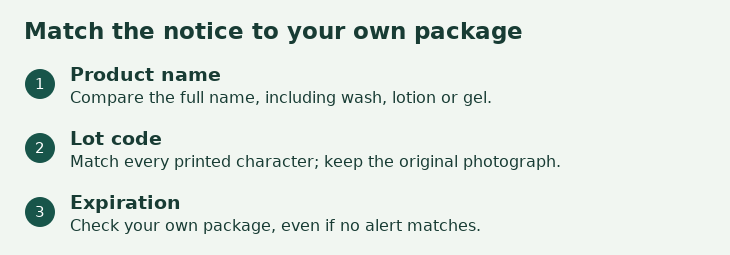
A headline about benzene in acne treatments can make a familiar tube suddenly look suspect. Start with the full name, lot number and expiration date on the product in your hand. Compare those details with the US Food and Drug Administration’s notice and any later recall affecting that product. An older headline about a brand does not tell you whether your tube was involved. If you are unsure what to do with a prescription, ask your pharmacist or prescriber before replacing it or making changes. You can do most of this work before you leave for Korea. [1–3]
Read the date on the story first
In March 2025 the FDA reported testing 95 acne treatment products containing benzoyl peroxide. It found elevated benzene levels in six products. The associated voluntary recalls were directed at retailers. The notice identifies specific products and lot numbers. There was also a separate manufacturer-initiated recall following the manufacturer's own testing. Those details matter more than a screenshot announcing that “acne treatments were recalled.” The notice provides links to the FDA's recall information so that you can look for updates. A dated report can remain a useful reference without serving as a complete list for every future trip. [1]
Two similar names often get mixed up in this conversation. Benzoyl peroxide is an active ingredient used to treat acne. Benzene was a contamination concern in the testing. An ingredient panel listing benzoyl peroxide is what you would expect to see on a medicine that contains it. It does not mean the panel is disclosing contamination. Equally, reading a perfectly ordinary label cannot tell you the result of a laboratory test. This is why agencies publish product identities and lot numbers, and why the first step is to match the package rather than guess from the percentage of active ingredient. [1, 2]
Find the three details that identify your tube
Read the entire name, including the words following the brand. A wash and a leave-on treatment in the same range can have very similar packaging. Then check the container and the outer carton for the lot number and expiration date. On a tube these may be printed or stamped where the end is sealed. If the mark is hard to see, take a picture in good light and enlarge the original. Avoid relying on a beauty retailer's stock photograph. It may show a different formulation, size, market or production run.
Save the details in the same note: “Product name ___; active ingredient and percentage ___; lot ___; expires ___.” If your phone translates the package, keep an untranslated copy too. Letters and numbers in a lot code can be misread, and a translation service may normalize punctuation or interpret part of a code as a word. Missing packaging need not derail a medical visit. Be precise about the limitation: “I know what ingredient I bought, but the lot is unreadable.” A pharmacist or the manufacturer can advise whether the package can be identified another way.
For a concrete example of why the date matters, the FDA listed one US lot of Walgreens Tinted Acne Treatment Cream that expired in March 2026. That particular date has already passed. A newer package with a similar name cannot be identified by that old headline alone. Conversely, finding an expired product in a travel kit is a reason to replace it even if you never find a matching recall. Check the current notice, the packaging and the directions for your own product; a historical example cannot clear a new purchase. [1–3]
If you find a match, read what the notice asks you to do
A recall notice typically explains which product is involved, who should take action and how. Those instructions may refer to retailers removing stock, to a manufacturer’s return process or to advice for people who already have the medicine. Read the instructions applying to the notice you found. The FDA’s March 2025 communication states that the recalls described there were at retail level. It also gives the agency’s assessment of the generally low cancer risk from the contamination it found. A matching lot is a reason to follow the applicable guidance; it cannot diagnose an illness or measure your personal exposure. [1]
If a package is unreadable or a manufacturer has issued a different notice, tell the pharmacist exactly what you have found. It helps to distinguish “I bought this item on the dates in the announcement” from “I have a matching lot number.” Keep the product or a photograph accessible until you have the advice you need. Do not open a new package in the store to find a lot hidden inside. Ask the retailer to help identify the stock. If the product is expired, ask how to dispose of it locally. Repacking the remains into a smaller travel jar loses the information that makes it identifiable.
Pack for the product you use
Read your own storage instructions before you decide where an acne medicine will travel. The American Academy of Dermatology advises storing benzoyl peroxide products as directed, and its statement discusses heat exposure. A closed vehicle, a bag left in direct sunlight or a hot hotel windowsill may be a poor place to leave medicines. If the storage conditions on the label are difficult to meet during your journey, ask a pharmacist for a practical plan for that formulation. Do not guess that freezing a product, transferring it to an unmarked bottle or adding water will protect it. [2, 3]
Consider a common travel problem: the carton has all the directions, but the dispenser is the part you will use abroad. Photograph both before packing, including the pharmacy label if it belongs to you. Keep the original container for identification. Decide where you will keep the written instructions if your phone is unavailable. If you are carrying a prescription product or several medicines, ask your pharmacist what documentation they can supply. Check transport and entry requirements for your actual itinerary through official services separately. A product’s US retail status does not answer a country’s import or dispensing questions.
Make the acne appointment about your skin as well as your suitcase
Once the product question is addressed, think about what prompted the clinic appointment. Are new painful bumps continuing, are you worried about scars, or has a routine become uncomfortable enough that you rarely use it? These are different reasons for reassessing care. Tell the clinician how often you actually use each prescribed and nonprescription product. A treatment used twice in a week because it stings is a different trial from one used regularly without irritation, even if the two patients purchased the same tube. Bring moisturizer, sunscreen and other treatment names into the discussion if they affect which steps you can tolerate.
If you are trying to explain your routine across languages, a two-column list works well. In the first column, write the generic ingredient, strength and whether the product is rinsed off or left on. In the second, describe when you use it, what you hoped it would help and what makes its use difficult. Brand names alone can be ambiguous across countries. A soap, wash, gel and combination prescription may sound interchangeable through translation. Before accepting a replacement, ask which item it replaces and whether anything in your routine already contains the same active ingredient. [3]
A Korea consultation for continuing acne care
Delight Dermatology Clinic is listed on Korean Skin Clinics and publishes an acne and redness service on its international website. It is a relevant option if you want a clinician to reassess persistent acne or discuss which part of a routine is causing difficulty. The clinic's service page supports that purpose. A pharmacy or the manufacturer is often better placed to identify a US lot number. When requesting an appointment, say if you want a medical assessment and explain whether you have time for a follow-up before your flight. Use the clinic's international contact route to confirm who will see you and what records to bring. [4, 5]
If a procedure is proposed during that visit, ask what the procedure is intended to address and whether the home-care plan will change. An answer about treating an old scar does not answer the question of what to do about new inflamed spots. Ask how you can tell which outcome the clinic will review, when they expect a review to be useful and how to transfer the plan to your US clinician. Request the generic names and strengths of prescribed products. A clearly documented decision to maintain or adjust an existing routine can be as useful as a new purchase.
Three questions patients bring home
“Can I just change brands?” A brand change does not answer an identification question. Work out whether your concern is an expired tube, a recall that matches a specific lot, an adverse reaction or acne that is still active. Each takes a different route. If the issue is repeated irritation or a prescribed medicine, bring it to a healthcare professional who can evaluate the formulation and how it fits into your routine. Buying several alternatives at once can make it harder to explain which product you used when symptoms began.
“What if I already used up the tube?” Check the purchase receipt and any photographs you still have. A receipt might indicate where and when it was purchased, although it may omit the lot. If you are reporting a suspected quality issue or reaction, identify the details that are missing. The FDA notice links to MedWatch for reports about US products. An incomplete report is different from confirmation that a medicine caused a symptom; your clinician can address the symptom even when the historical package cannot be definitively identified. [1]
“What should I leave with?” Before you fly home, aim to have a short plan you can read in your own language. It should say which products you are continuing, which you are replacing, who to contact for problems and when to reassess your acne. Keep the plan beside the product photographs. On your next trip, you will have a much easier starting point than a brand name remembered from a shopping bag or a headline saved without its date.