What happens at a first skin consultation in Seoul?
A useful first consultation reviews your concerns, medical and treatment history, and skin findings before proposing care. Bring product labels and previous procedure details, rank your priorities, and ask about alternatives, recovery and the complete quote. Booking a visit does not commit you to treatment; leave with a clear written plan even if you decide to wait.
Choose one priority
Start with the concern that would make the visit worthwhile. Write it in your own words, then add two secondary concerns if needed. This gives the doctor a useful starting point and makes it easier to recognize when a proposed package expands beyond your priorities. Bring a few clear photographs that show the concern under ordinary conditions, especially if it fluctuates or is not visible on the appointment day.
Create a one-page history
List current medicines, supplements, allergies, medical conditions, prior cosmetic procedures and significant reactions. For previous injectables, include the product and treatment date when known. For skincare, photographs of ingredient labels can be more useful than translated product names. Describe how long each previous treatment was tried and whether it helped. A concise record saves consultation time without leaving important details to memory.
Expect an explanation of the diagnosis
Ask the clinician to identify what is being treated before discussing a device brand. The explanation should connect the examination findings to the recommended approach, alternatives and likely limitations. If several concerns are present, ask which should be addressed first. You should be able to describe the plan back in plain language: the target, the intended change, the recovery and the review point.
Separate the decision from the booking
A reserved appointment does not answer whether a procedure is appropriate for you. Leave room to ask questions and to decide after examination. Request a written quote and the exact names of proposed treatments. If you feel unsure about a new recommendation, ask to take the information away and review it. A deposit or limited travel schedule should not replace your understanding of the proposed care.
Leave with usable instructions
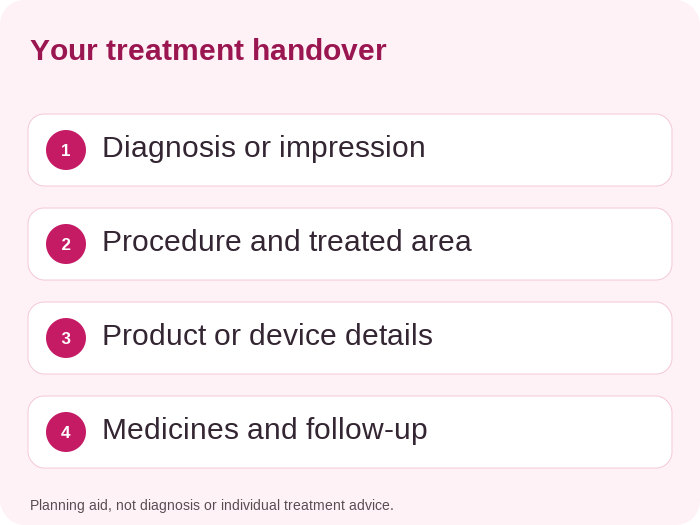
Before leaving, obtain the diagnosis, plan, product or device details where relevant, aftercare and follow-up contact. Ask which symptoms need urgent attention and how to obtain help outside clinic hours. If treatment is deferred, record the reason and the next step. A successful first consultation produces a clear decision and a practical plan, whether or not a procedure takes place that day.
Use appointment time deliberately
Put the most important question first rather than saving it until the consultation is ending. If you have several concerns, ask how much can reasonably be assessed in the appointment and whether a separate visit is needed. Bring a companion only if their presence helps you understand and remember the discussion. Make clear that your own priorities guide the decision. If a coordinator summarizes the plan, ask to confirm medical points with the treating clinician so that the diagnosis and recommendation are not lost in translation.
A useful result even without treatment
You can leave with a valuable outcome even when no procedure is performed: a clearer diagnosis, a review of previous treatment, an appropriate referral or a plan to reassess. Ask the doctor to record what was found and what remains uncertain. If you need time to decide, request the written proposal and ask whether a later examination will be required before treatment. This prevents the consultation from becoming an all-or-nothing purchase decision and gives you something concrete to compare with a second opinion or discuss with your clinician at home.
Questions to take to your consultation
What diagnosis explains the concern I want to address? Why is this option recommended over the alternatives? What information will I receive in writing before I decide?
Prepare your U.S.-to-Korea consultation brief
Write a short brief with your main concern, prior diagnoses, generic medication names, allergies, previous procedures and what you hope will change. State your arrival and departure dates, but do not make same-day treatment a condition of the appointment. Ask who will conduct the medical consultation, what English communication is available during consent, and whether you can receive the assessment in writing. Include the contact details of your U.S. clinician only through the clinic's agreed secure process and with your permission. Confirm the consultation fee and what happens if no procedure is recommended.
Patient questions
Do I have to be treated on the consultation day?
No. Ask for the proposed plan and quote, and take time to consider anything you do not understand before deciding.
Should I bring skincare bottles or photographs?
Clear photographs of labels and ingredients are useful, especially for prescriptions, acids, retinoids and products that caused a reaction.