Should I combine several skin treatments in one visit?
Only when the clinician can explain the purpose, timing and risks of the exact combination for your findings. A package does not establish that every component is needed or appropriate on the same day. Ask whether staging allows better assessment, what would change the next step and how combined recovery and follow-up will be managed.
A combined plan needs a reason for every component
Some skin treatments can be combined, but there is no universal safe number, order or spacing that applies to every Korea visit. The decision depends on the diagnosis, the exact procedures, the treated areas, previous treatments and how your skin is recovering. A package name is not a clinical explanation. Before agreeing, ask the treating doctor to connect each component to a specific concern and describe what would happen if you chose fewer treatments.
The useful goal is a coherent plan that you can understand and follow. That might involve selected procedures during one appointment, separate visits or a consultation followed by treatment on another trip. This guide focuses on how to evaluate sequencing and coordination. The detailed benefits and risks of individual procedures remain important and should be read alongside it, especially when a package combines injectables with energy-based treatments.
Start by separating the concerns
Write down the findings you want addressed rather than a shopping list of devices. Uneven pigment, visible vessels, movement-related lines, loss of volume and depressed scars are different targets. Several can coexist, but that does not mean every concern needs treatment now. Ask the doctor to identify the main priority and which secondary decisions can wait.
A combination may make sense when its components address different parts of a problem. AAD guidance on acne scars, for example, describes situations where more than one treatment is used for different scar features. This does not establish that the same combination is suitable for every person or that all steps should happen together. Ask what each component adds, how the benefit will be judged and whether one is doing most of the work. An optional finishing step should be presented as an option.
Read the evidence: AAD: Acne scar treatment
Understand the case for same-day treatment
Same-day treatment can reduce the number of visits and may be convenient when a clinician judges the combination appropriate. AAD meeting coverage discusses selected injectable and nonablative combinations while emphasizing assessment, timing and order. It is expert meeting reporting, not a universal protocol to copy into a travel itinerary.
Ask why a same-day approach is preferable for you. Is there a clinical reason, or is it mainly a scheduling convenience? Which areas are treated, and do the procedures affect the same tissue? Would the clinician recommend the same sequence if you lived nearby and had no flight deadline? These questions do not imply that combining treatment is wrong. They help distinguish an individualized recommendation from a package whose timing was fixed before anyone examined your skin.
Read the evidence: AAD meeting report: Cosmetic treatment order
Understand what staging can add
Separate appointments create opportunities to assess healing and decide whether the next step is still needed. That may be helpful when swelling changes the appearance, when your response is uncertain or when one treatment is intended to address the main concern before considering another. Staging also has costs: more visits, travel and time away from work may be needed.
Ask what will be checked between stages and what result would lead to proceeding, changing the plan or stopping. A delay without a clear purpose is different from a planned review. If the proposed review falls after you leave Korea, discuss how it can realistically occur. The right question is not whether staged care is always safer or always better, but whether the decision points fit the procedures and your circumstances. A plan should remain adaptable when the actual response differs from the prediction.
Ask pair-specific questions instead of requesting a universal timetable
For laser or light treatment with toxin or filler, ask which device, treatment area and tissue effect are involved, and how the clinician accounts for injections and recovery. The words laser and filler cover many different interventions. Existing filler matters too; share what you know about its location, date and product rather than treating it as irrelevant because it was done elsewhere.
For resurfacing with a peel, ask whether both are targeting the same surface problem and how the team assesses the total injury and aftercare. For scar procedures, ask which scar feature each step addresses. For a booster with needling, ask how the product is intended to be delivered and what supports that use. You should not have to choose technical settings yourself. You should be able to understand the rationale and the uncertainties well enough to decide whether to proceed.
Do not let an add-on become invisible in the consent
A short description such as booster, glow treatment or regenerative facial can hide important differences. Ask for the full product name, the route of administration and the purpose of every added step. Something suitable for application to intact skin should not automatically be assumed suitable for use through needles or injection.
The US FDA states that its review of microneedling devices does not establish the safety or effectiveness of delivering cosmetics, medicines or other products through them. Its RF microneedling communication also reports serious complications with certain uses, including burns, scarring, fat loss and nerve damage. These are US safety sources, not proof of Korean authorization or a prediction of your outcome. They support treating needling and RF needling as medical decisions with their own consent, rather than as minor extras attached to a larger package.
Read the evidence: FDA: Microneedling devices · FDA: RF microneedling safety communication
Give one clinician the complete sequence
If you plan to visit multiple clinics, share the entire proposed schedule with each treating doctor before undergoing any procedure. A clinic cannot account for a treatment it does not know occurred. Avoid treating different booking coordinators' assurances as a coordinated medical plan. Ask who is responsible for reviewing the sequence as a whole and who will assess a reaction.
Keep the actual treatment record, not just appointment confirmations. It should identify dates, areas, products and devices to the extent relevant and available. If you change the schedule, tell the next clinician before treatment begins. A second appointment may need to be postponed even if it was booked weeks earlier. The cost of changing an appointment should not prevent the next doctor from making a fresh assessment based on your current skin rather than the original itinerary.
Bring the factors that can change the plan
Tell the clinician about recent procedures, existing injections or implants, medicines, pregnancy intentions where relevant, allergies and previous healing or pigment problems. Mention a new rash, infection, irritation or significant sun exposure. Include home treatments as well as clinic treatments: a recent peel or an unfamiliar combination of exfoliating products can be relevant even when no appointment was involved.
Ask which findings would mean pausing elective care. If the answer is that nothing could change a predetermined package, request a clearer medical explanation before proceeding. Your skin on the treatment day may differ from photographs sent at booking. Make room for that examination. Consent to an overall goal does not mean you must accept every component unchanged, especially if new information emerges or you no longer feel comfortable with the proposed balance of benefit and risk.
Plan one aftercare routine that accounts for every treated area
Request instructions for the combined plan, including any differences between areas. Clarify cleansing, products, makeup, activity and the review arrangements for the actual procedures performed. If two instructions appear inconsistent, ask the treating team to reconcile them before leaving. Do not choose whichever instruction sounds least restrictive or combine advice from unrelated online protocols.
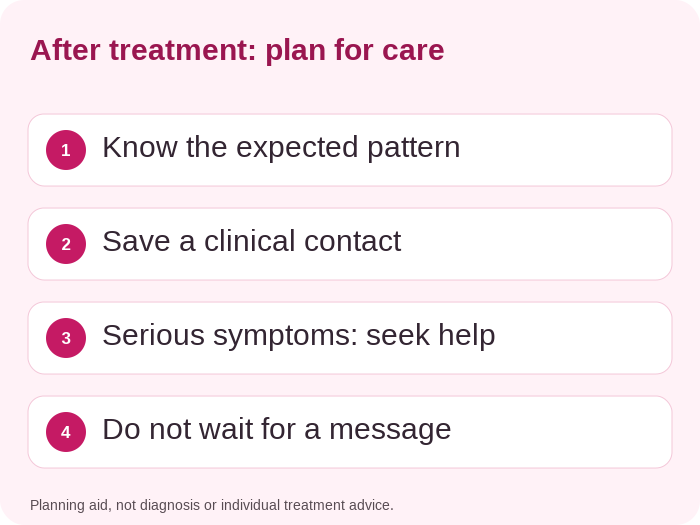
Ask how to describe a new symptom when more than one treatment has occurred. A dated record of the sequence helps a clinician assess what may be relevant. Keep contact details for clinical review and know where to seek care if that route is unavailable. With filler, severe or unusual pain, whitening or other concerning skin discoloration, or any vision change needs urgent assessment; the FDA identifies unintended injection into a blood vessel as a serious risk. Do not wait for the next elective appointment to report such symptoms.
Read the evidence: FDA: Dermal filler safety
Budget for decisions, not only for a bundle
Ask for an itemized quotation that separates consultation, each procedure, medicines or aftercare products, and planned reviews. Identify the components that are essential to the proposed result and those that are optional. Request the terms for unused sessions or a change of plan in writing before prepaying. A discount is useful only if the treatment still fits the clinical assessment and your priorities.
Compare the whole commitment, including repeat travel and the possibility of additional review. If a staged approach costs more, ask what information the additional decision point is intended to provide. If a package costs less, ask whether the quoted price depends on completing all treatments within a fixed period. You do not need to choose the largest plan to make a Korea trip worthwhile. A focused consultation can help you decide that some concerns are better managed later or closer to home.
Use a simple written sequence before you book
For each proposed step, write the concern, the purpose of treatment, the intended date and what must be true before proceeding. Add the clinician responsible, the review arrangement and the next decision. Leave the timing to the treating team; the exercise is a way to expose missing explanations, not to build your own protocol.
Then compare that sequence with your actual itinerary. Can you attend the needed review? Who will assess you after you return home? What happens if the first step causes more irritation than expected? CDC medical-tourism guidance emphasizes records and continuity of care. Putting these practical details beside the procedure names makes the plan easier to assess. If the sequence only works when every response is ideal and no appointment changes, ask for an alternative that leaves more room for clinical judgment.
Read the evidence: CDC: Medical tourism
A listed clinic and doctor for a coordinated consultation
Delight Dermatology Clinic lists medical and aesthetic skin services, including pigmentation, acne and scar-related care. Its official biography presents Dr. Yun Sang Youl as a dermatology specialist with medical and aesthetic dermatology interests. This makes the listed clinic and physician relevant to exploring a diagnosis-led plan across several concerns.
Use the profiles below to prepare your questions and the international website to request a consultation. Send the complete list of treatments you are considering, including appointments elsewhere, and ask who will coordinate the sequence. The published service range does not establish that every combination is appropriate or that one doctor personally performs every listed procedure. Confirm the treating clinician, language arrangements and follow-up before accepting a package. The selection is based on relevant published services rather than an endorsement of a particular treatment bundle.
Read the evidence: Delight: International clinic website · Delight: Dr. Yun Sang Youl biography
Ask for one coordinated plan across all procedures
If you are comparing a Korea package with separate treatments at U.S. clinics, request an itemized explanation of each component, its purpose and who is responsible for the combined plan. Ask which procedure determines recovery and whether a staged approach would be easier to assess safely. Tell the clinician about treatments recently performed at home, even if they were at a different clinic. Keep one record of the sequence, products and settings. Do not let the length of your vacation become the reason to combine interventions that would otherwise be separated by a review.
Patient questions
Is there a safe maximum number of treatments in one day?
There is no universal number that establishes safety. The exact procedures, areas, medical history and clinical assessment matter more than the count.
Should laser always come before filler?
There is no single order for all devices and injection plans. Ask the treating clinician to explain the exact combination, existing filler and reasoning for the proposed order.
Can I go to several clinics during one trip?
If you do, disclose the complete sequence to every treating doctor and clarify who coordinates review. A later procedure may need to change after the response to an earlier one.
What if the package no longer fits after the first treatment?
Seek clinical reassessment before completing the remaining steps. Clarify unused-session and plan-change terms before paying so the financial arrangement does not obscure that decision.