How long should I stay in Korea after skin treatment?
There is no safe universal stay length for all skin procedures. Ask the treating clinician to distinguish visible recovery, necessary examination and fitness for your actual journey. Schedule any recommended review before departure and leave flexibility for delayed healing. If the proposed course exceeds your available stay, consider consultation only, another approach or a later visit.
Separate three timelines
Ask about the appointment itself, the period when visible recovery may affect your plans, and the time needed for clinical review. These are not necessarily the same. A brief procedure can still require follow-up, and an improved appearance does not automatically mean every concern has resolved. Request an individualized recommendation for the exact treatment, area and intensity rather than a generic downtime label.
Book the review before departure
If the clinician recommends an in-person check, reserve it while planning the initial appointment. Ask what the review is intended to assess and whether the timing could change. Do not leave all remaining days fully committed to tours or onward travel. A flexible interval is useful if the doctor wants to examine a reaction or adjust aftercare before you return home.
Explain the actual journey
Tell the clinic about long flights, connections, outdoor activities and any remote destination after Seoul. Ask whether the proposed treatment affects those plans and whether medical clearance or a change of timing is appropriate. Surgical procedures and treatments involving sedation need their own travel advice; do not apply a short appointment’s schedule to a different type of intervention.
Plan for an altered course
Before treatment, consider what you would do if recovery took longer than expected. Identify accommodation flexibility, transport to the clinic and the costs of changing travel. Ask the clinic how a complication would be assessed and whether referral to another facility might be required. This preparation makes it easier to respond to an actual problem without making rushed logistical decisions.
Choose a plan that fits honestly
If the recommended observation or recovery period is longer than your stay, ask about alternatives: consultation only, a different procedure, a smaller treatment area or a later visit. A short trip does not create a medical reason to compress a course. The final itinerary should support the chosen care rather than forcing the clinician and patient to work around an unsuitable deadline.
Use a three-date planning exercise
Write down the proposed treatment date, the earliest recommended review and your departure date. Add any onward travel that could make assessment difficult. Ask the clinic whether that sequence is clinically workable and what might require a change. This simple exercise can reveal a mismatch hidden by a statement such as little downtime. It also makes it easier to compare alternatives: a different date, consultation only or a treatment whose review requirements you can actually meet. Do not interpret a free calendar day as evidence that recovery will be complete.
Distinguish fitness to travel from appearance
Being comfortable appearing in public and being ready for a particular journey are different questions. Ask the treating clinician what medical factors matter for your procedure, and obtain separate guidance when surgery, sedation or another intervention is involved. Explain the duration of flights, transfers and any limited access to care at the destination. If a problem develops before departure, seek assessment rather than relying on the original itinerary advice. The plan should be updated to reflect your actual recovery, not treated as a promise made before the procedure occurred.
Questions to take to your consultation
What clinical review is needed before I leave Korea? Which parts of my itinerary could interfere with recovery? What is the alternative if my available stay is too short?
Plan around review, return travel and care at home
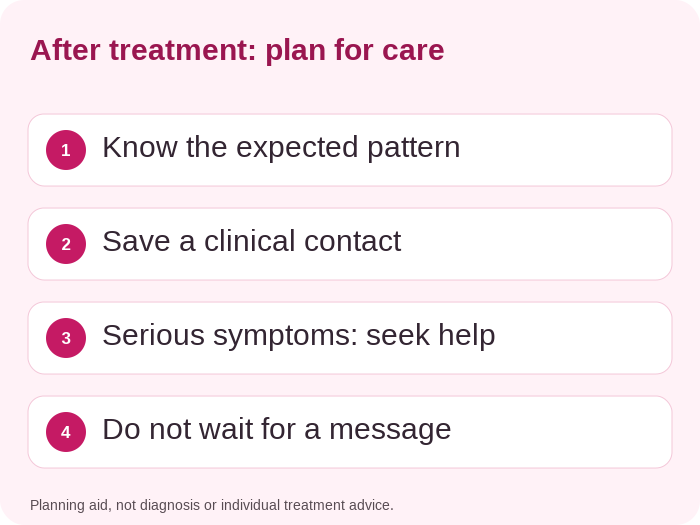
Give the clinician your complete return itinerary, including connections and the date you need to resume work in the United States. Ask which reviews must happen in Korea, what healing milestones matter for travel and what would require delaying departure. Do not apply a single no-downtime label or universal flying interval to every laser, injection or skin procedure. Keep flexibility for reassessment and ask about the financial consequences of changing your stay. Before travel, identify a clinician at home who can provide any needed follow-up rather than assuming that a return flight marks the end of recovery.
Read the evidence: CDC Yellow Book: planning overseas care and follow-up
Patient questions
Is little downtime the same as being ready to fly?
No. Appearance, clinical follow-up and fitness for a journey are separate questions, especially with surgery, sedation or a complication.
What itinerary details should I tell the clinic?
Share flights, connections, outdoor activities, onward destinations and access to care. Ask whether these affect procedure choice or timing.