How are post-acne dark marks treated?
Flat dark marks after acne may be post-inflammatory hyperpigmentation. Treatment focuses on controlling new inflammation, protecting skin from light and selecting a tolerable topical plan; procedures are considered selectively because irritation can create more pigment. A dark mark differs from a depressed scar or persistent redness. Ask a clinician to identify the component before choosing treatment in Korea.
What the treatment does
Post-inflammatory hyperpigmentation is excess pigment following inflammation or injury. The trigger may be acne, eczema, friction or a cosmetic procedure. The priority is preventing fresh inflammation while allowing existing marks to fade. Treating pigment without controlling its cause can lead to a frustrating cycle of new spots.
Who it may suit
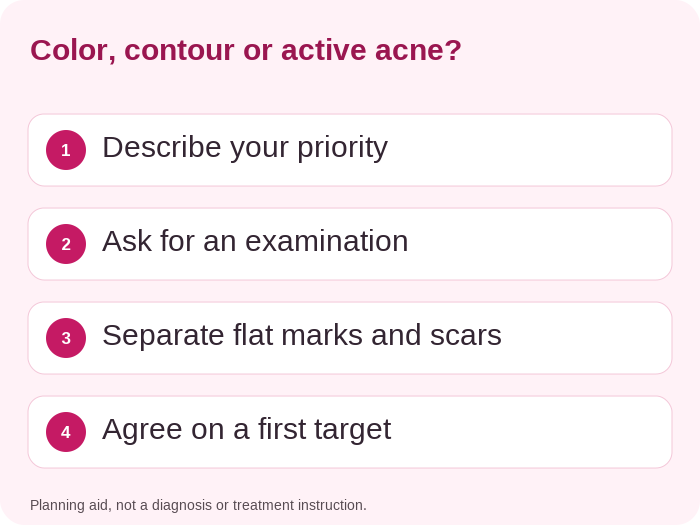
The doctor should distinguish a flat brown mark from a scar with altered texture and from persistent redness. A patient with active acne may need acne treatment first. Skin prone to pigment change requires careful selection of products and procedures. A detailed history of what preceded the mark can be more useful than its current shade.
Treatment and recovery
A gentle routine and an individualized topical plan are often the foundation. Track marks with photographs rather than daily mirror inspection. Procedures may be considered selectively after discussing the risk of causing further inflammation. Improvement can be slow, particularly when pigment is deeper or the trigger continues.
Risks and warning signs
Harsh scrubs, stacked acids and overly aggressive laser treatment can worsen the very concern being treated. Some prescription lightening agents need defined duration and supervision. Do not apply unidentified bleaching mixtures or continue a product through significant irritation.
Results, alternatives and the next decision
Separate the existing marks from the source of new inflammation. If acne continues to produce lesions every week, a pigment-only plan can feel ineffective even when older marks are fading. If irritation from a cosmetic routine is the trigger, simplifying that routine may matter more than adding another brightening step. Ask the doctor to identify which marks are likely to fade with time and which need a different diagnosis or treatment. Compare the same representative marks over weeks rather than counting every fluctuation in overall complexion. A procedure may be considered when the expected benefit outweighs the chance of another inflammatory reaction, but it should not be the automatic next step after a brief trial of products. For scars with altered depth, a pigment treatment will not restore the contour. A good consultation explains both the color component and the texture component so that improvement in one is not mistaken for failure to treat the other.
Plan the visit around diagnosis
Bring photographs from before the pigment appeared, a list of previous laser names if available, and the products that have caused irritation. Ask the clinic to write down the diagnosis and distinguish the primary treatment from optional add-ons. For a visitor, it is useful to ask whether a test area and later review would be more sensible than treating the whole face immediately. Consider the timing of outdoor sightseeing, long flights and a return-to-work event. A package that uses every available day in Seoul may leave no opportunity to assess a delayed reaction. Reserve time for review instead of assuming that a last-day appointment is convenient. Keep copies of treatment settings or the procedure record where the clinic can provide them; these can help another clinician understand a later reaction.
Questions for your consultation
Ask whether the discoloration is still actively forming, how to treat the underlying acne or dermatitis, and what improvement should be expected before escalating to a procedure.
Comparing a quote in Korea
For post-inflammatory pigmentation care, compare assessment of the original inflammation, topical regimen duration and the rationale for any procedure. Ask for these items in writing so a lower headline price does not conceal a different scope of care. Confirm which follow-up visits are included and what happens if the clinician changes the plan after examining you. Discuss costs after agreeing on the diagnosis and realistic goal; a package should not determine how much treatment you receive.
Bring the history behind the dark marks
For a consultation in Korea, show when the original inflammation occurred and what was used to treat it in the United States. Include acne medications, peels, lasers and products that irritated your skin. Ask whether the active problem is controlled before adding a pigment procedure. If the plan includes a new prescription, discuss how it will be monitored after you return and how it fits with your current regimen. Keep the diagnosis in the record so a clinician at home can distinguish treatment of residual marks from treatment of the underlying disease.
Patient questions
Will a pigment treatment fix a depressed acne scar?
It may address color but does not restore the missing contour. A consultation should distinguish pigmentation from scar depth and plan each component separately.
Should I exfoliate more to fade dark marks faster?
Repeated irritation can worsen discoloration. Ask for a tolerable routine and review persistent stinging or scaling rather than adding more acids or scrubs.