Are dark marks after acne the same as acne scars?
Flat dark marks after inflammation are often post-inflammatory hyperpigmentation, while a scar changes the skin’s contour or texture. Both can coexist. A consultation should identify the original trigger and whether it remains active before addressing the residual color. This diagnostic guide helps separate the concerns; the pigmentation-care page covers treatment choices and recovery.
Understand the sequence
Post-inflammatory hyperpigmentation describes darkening left after inflammation or injury. Acne, eczema and irritating products are among the possible starting points. A mark may remain after the original problem has settled. The practical first question is whether inflammation is still active: repeatedly treating color while new irritated spots appear can make progress difficult to judge and may leave the underlying problem unaddressed.
Describe what happened first
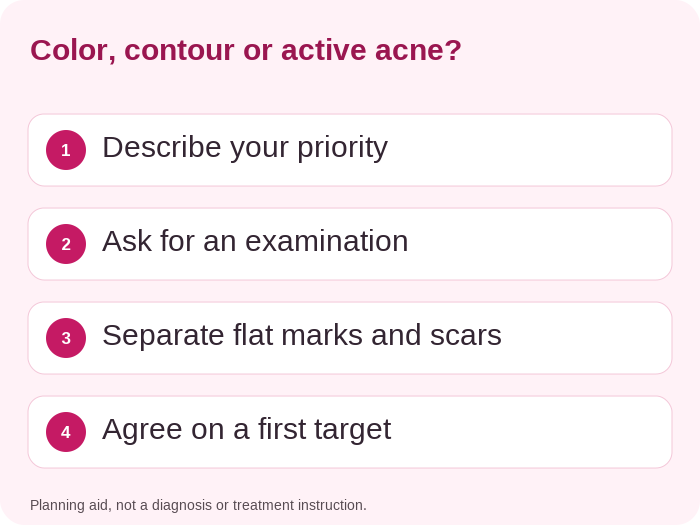
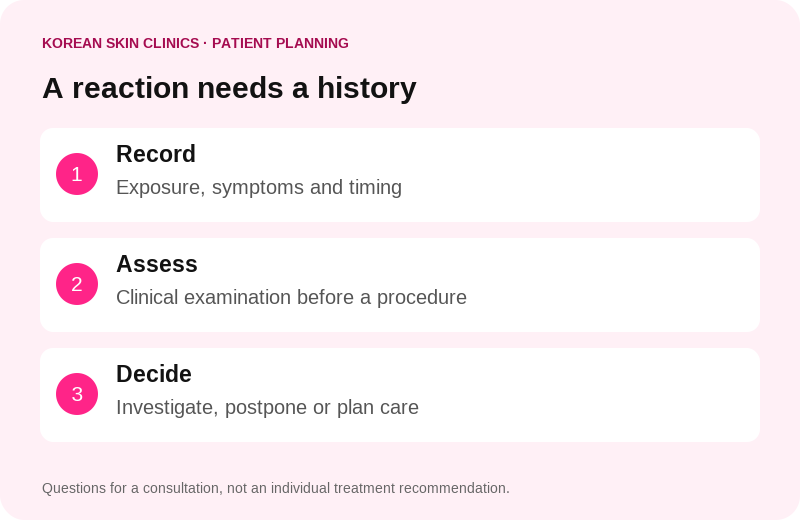
Bring a chronology that begins before the discoloration. Record whether the area started as a pimple, rash, burn, scrape or reaction to a product. Note the timing of any peels, lasers or home exfoliation. Show the doctor both the marks you want treated and any new symptoms. A clear account is more useful than asking for the strongest treatment for pigmentation without identifying its cause.
Match the goal to the finding
Ask the doctor to distinguish flat color changes from true texture changes and to identify any remaining inflammation. A procedure selected for a depressed scar may not be the same choice used for a flat brown mark. Request a plain-language explanation of the proposed target. If several findings coexist, ask for an order of treatment and a way to judge each concern separately.
Keep the routine interpretable
A useful plan is one that makes it possible to identify what helps and what irritates. Bring your current skincare list and ask which products to continue, pause or replace. Do not interpret stinging as evidence that a treatment is working. Establish how to contact the clinic if a product causes a new rash, and keep the containers or ingredient lists available for that conversation.
Think beyond a single appointment
Discuss an assessment interval long enough to judge fading rather than promising that all marks will disappear during a holiday. Ask which changes would warrant an earlier review and which can be followed with photographs. If you are offered a package, request the reasoning for the number of sessions and the conditions under which remaining appointments would be changed. Avoid paying for a fixed course before the diagnosis is clear.
A useful consultation example
Imagine that old acne marks are fading but several new dark spots appear each month. Bring photographs showing both processes. Ask whether the first priority should be preventing the new lesions, treating existing marks, or a carefully coordinated combination. This is different from a situation where the original trigger has fully stopped. The distinction helps you understand why the clinician may recommend medical treatment or a simpler routine before adding a procedure specifically aimed at color.
Set a fair observation method
Choose a few representative marks and photograph them under the same conditions at the interval agreed with the clinician. Record whether new marks are appearing separately from whether older ones are fading. Without that distinction, a useful treatment can seem ineffective because the total number of marks remains similar. Ask the doctor what kind of change would support continuing, what would justify changing course and which new symptoms would suggest irritation rather than ordinary slow progress.
Discuss the next procedure carefully
If discoloration followed an earlier peel or device treatment, disclose that history even if the treatment was performed elsewhere. Ask what the clinician would change in the proposed approach and why. Request a plan for managing a recurrence, including access to review after you leave Korea. If the explanation is simply to use a stronger treatment, ask how that choice addresses your previous response. The objective is a reasoned plan for your skin, not an escalating sequence based only on persistent color.
Questions to take to your consultation
What caused the marks and is that process still active? Is the proposed treatment addressing color, texture or inflammation? How will we distinguish slow improvement from a reaction?
Explain the original trigger to both clinicians
For a U.S.–Korea consultation, organize the timeline into the original inflammation, the treatment used and the marks that remained. Include product names and strengths instead of only brand photographs. Ask whether a proposed procedure addresses the residual pigment or might interfere with control of the underlying condition. Keep the written diagnosis for your clinician at home and agree on how to judge progress over time. Do not assume a treatment that helped a friend's sun spots is the right approach for marks left by your acne or a previous reaction.
Patient questions
Why do new dark marks keep appearing?
Ongoing acne, dermatitis or product irritation may continue creating marks even while older ones fade. The cause needs assessment alongside the residual pigmentation.
Should I treat a brown mark with a scar procedure?
Not automatically. Ask whether the area has a color change, a structural scar or both; the appropriate approach depends on that distinction.