When is it reasonable to postpone a cosmetic skin procedure?
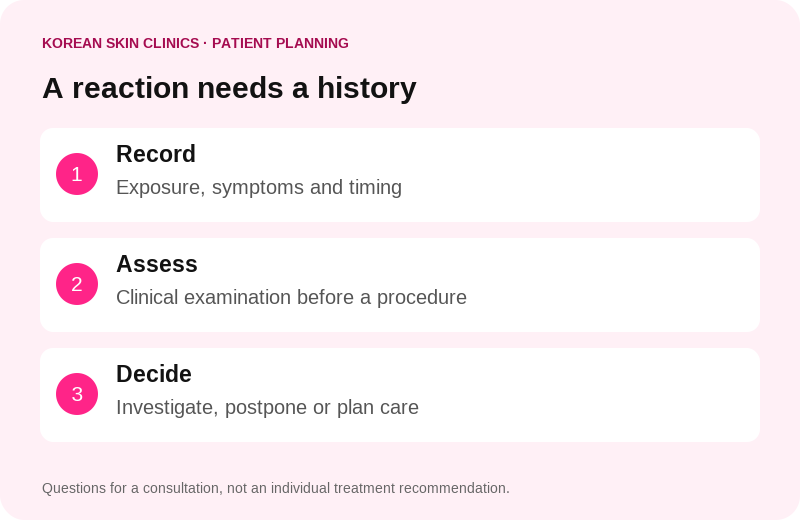
Postpone when the diagnosis or plan is unclear, new health information needs review, active symptoms affect suitability, or your schedule cannot support the recommended recovery and follow-up. Ask what must change before reconsideration. A booked trip or promotion is not a medical reason to proceed; consultation, records review or a second opinion can still be useful.
Recognize an unresolved question
Postponement can be reasonable when the diagnosis is unclear, the skin needs further assessment or the proposed plan is not understood. Tell the clinician what remains uncertain. Ask which information or examination would resolve it and whether another appointment is needed. You do not need to make a final treatment decision simply because you have arrived at the clinic.
Review timing and health changes
Report new symptoms, changes in medicines, pregnancy-related circumstances and recent procedures before treatment. Ask whether any change affects suitability or timing. Do not independently stop prescribed medication to fit an appointment. The clinician should explain whether the plan can proceed, needs adjustment or should wait. A revised recommendation based on new information is a normal part of clinical decision-making.
Consider the follow-up constraint
If your trip does not allow the recommended review or your onward plans conflict with recovery, ask about alternatives. Consultation only, a later date or a different approach may fit better. The cost of changing a booking should be weighed separately from the medical decision. A departure deadline is not evidence that the skin is ready for a procedure.
Notice pressure without guessing motives
If you are asked to add services you do not understand, request an itemized explanation and time to consider it. A promotion does not remove the need for informed consent. You can decline optional components while still asking about the original concern. Keep the discussion factual: what is recommended, why, what it may achieve, what it may not achieve and what happens if you wait.
Leave with a next step
If you postpone, ask what should happen before reconsideration. That might be treatment of an active condition, review of records, a more suitable schedule or a second opinion. Request the relevant findings and recommendations in writing. A decision not to undergo a procedure today can still produce useful progress when you understand the reason and have a clear path forward.
Separate disappointment from the decision
It can be frustrating to travel for a service and learn that the recommended plan is different or should wait. Ask the clinician to explain the reason and whether any useful assessment or care can still be completed. Avoid letting the effort already spent on travel become the main reason to proceed. The medical decision should reflect the current findings and practical follow-up. A clear explanation can help you use the visit productively without converting a disappointment into a procedure you do not understand or cannot adequately review.
Use a second opinion with a clear question
If you seek another opinion, bring the first assessment and ask about the specific point of uncertainty. Was the diagnosis disputed, the timing unsuitable or the expected benefit limited? This makes the second consultation more useful than simply searching for someone willing to provide the original service. Ask the next clinician to explain the reasoning independently and compare the plans on the same goals and constraints. If recommendations differ, request clarification of the trade-offs rather than choosing the answer that sounds most immediately convenient.
Questions to take to your consultation
Which unresolved issue makes waiting reasonable? What needs to change before the procedure is reconsidered? What useful care or assessment can happen without this procedure today?
Make a consultation-only visit an acceptable outcome
Traveling from the United States can create pressure to have a procedure because flights and lodging are already paid for. Separate those costs from the medical decision. Ask about cancellation and deposit terms before booking and whether the consultation fee stands alone if treatment is not recommended. If the diagnosis, product, recovery plan or follow-up remains unclear, ask for written information and time to consider it. Taking the assessment back to your usual clinician can be a worthwhile result. Avoid adding a different procedure simply to use a prepaid package or fill an available appointment.
Patient questions
Should I stop a medicine to keep my appointment?
Do not independently stop prescribed medication. Discuss it with the prescribing and treating clinicians and adjust the appointment if needed.
How can I make a second opinion useful?
Bring the first assessment and ask about the specific uncertainty, such as diagnosis, timing, expected benefit or follow-up requirements.