Can one Korea visit complete laser hair removal?
A single visit generally cannot complete a laser hair-reduction course because hairs cycle through growth phases. Response depends on hair pigment, skin tone, area and device; very light or gray hair may respond poorly. Ask how sessions can continue at home, what maintenance may be needed and how tanning or a previous reaction changes the plan.
Decide whether starting in Korea fits your longer plan
Laser hair removal in Korea is easiest to plan when you think beyond the appointment available during your holiday. Decide whether you want a consultation, one session within an existing course, or the start of a new course that will continue at home. Tell the clinic which situation applies. A low per-session price is less useful if you cannot return at appropriate intervals or obtain the information needed by the next practitioner.
Write down the exact areas you want treated, your priority area and the outcome you would consider worthwhile. Less time spent shaving can be a meaningful goal even when some hair remains. Ask what improvement is realistic for each area and whether maintenance belongs in the budget. You do not need to commit to every body area at the first visit.
Make the skin and hair assessment specific
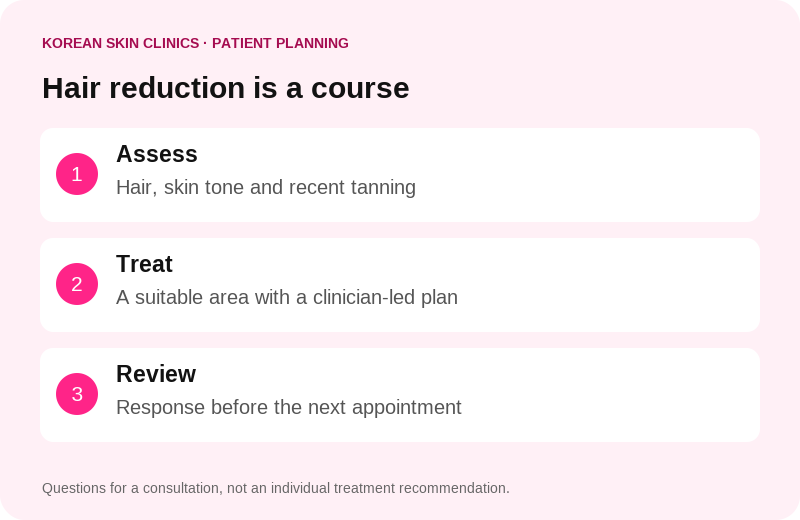
The consultation should consider the location, color and coarseness of your hair together with your skin and recent sun exposure. Two areas on the same person may need different expectations. Ask the clinician to assess the actual hair, not only a close-up phone photograph or a booking category such as full body.
Bring a timeline of previous hair-removal methods and laser appointments. Include any burns, persistent discoloration or disappointing response. Tell the clinic about medicines and medical conditions before treatment, including a history of troublesome scars or cold sores where relevant. Do not stop a prescribed medicine on your own to fit a booking. Ask the clinician whether your history changes the plan and whether more information from a previous provider would help. This assessment is part of choosing treatment, not an optional extra after buying a package.
Read the evidence: AAD: preparing for laser hair removal
Understand what a device name does and does not tell you
A machine brand can identify the platform, but it does not tell you the complete treatment delivered to your skin. Ask which laser or wavelength is proposed, why it fits the area and hair characteristics, and who selects the settings. You should not need to choose technical settings yourself. The useful patient question is whether the operator can explain the choice and adjust the plan after assessing your response.
Ask how your eyes will be protected and how the team monitors skin comfort during the appointment. If you feel unexpected discomfort, speak up; enduring more pain is not a reliable measure of a better result. Request the name of the clinician responsible for reviewing complications, even if another trained team member carries out part of the procedure. A clear chain of responsibility matters more than a broad promise that the clinic uses advanced equipment.
Read the evidence: AAD: procedure and safety
Preparation should match the booked area
Obtain the clinic’s preparation instructions before the appointment, including its advice about shaving, waxing, plucking, tanning and products used on the area. Explain what you have already done rather than guessing that it will be acceptable. If you have a tan or a new rash, contact the clinic before traveling across the city for treatment. Let the clinician decide whether it is appropriate to proceed.
For facial treatment, mention any recent peel or other procedure. For body treatment, describe tattoos, irritated patches and areas that have reacted previously. Ask the clinic how these will be avoided or assessed. Also consider ordinary practicalities: clothing that rubs the area, the route back to your accommodation, and whether you have the supplies specified in the aftercare instructions. Preparing well is about reducing uncertainty, not buying an elaborate recovery kit.
Build a calendar without compressing the course
Hair growth is not synchronized, which is why one appointment should not be treated as a complete course. Ask the clinician for a proposed interval and the reason for it. The interval may be reviewed as the course progresses. Avoid requesting extra sessions on consecutive holiday days simply because you are available; a travel schedule does not determine when another treatment is appropriate.
If you live outside Korea, ask whether your next appointment should be with the same clinic or whether care can reasonably continue at home. You may prefer to consult a provider near home before starting. Keep a calendar of actual treatment dates and the areas covered, rather than writing only that you had laser last month. When appointments are delayed, seek advice about the next step instead of assuming you must restart or buy a new package.
Judge results with comparable information
Choose a simple way to evaluate whether the course is helping. Record the area treated, how often you need to groom it, your impression of density and any skin reaction. Photographs can help when taken in similar lighting and at comparable points in your grooming routine. A photograph immediately after shaving is not a fair comparison with one taken after longer regrowth.
Bring that record to review. Ask whether the response supports continuing the same approach, changing the plan or stopping. If only some hair remains, discuss whether another method makes more sense for that residual pattern. Do not assume that adding more areas compensates for poor response in the original area. The point of review is to make the next decision using your own experience, not to demonstrate that you have completed a predetermined number of visits.
Plan aftercare around normal activities
Ask the clinic to distinguish expected temporary discomfort from changes that need assessment, and request written instructions appropriate to the area treated. The AAD describes temporary redness and swelling as common, while burns, blistering, pigment changes and scarring are possible complications. Sun protection is important, and recovery experiences are not identical for every patient.
Tell the team if you plan swimming, strenuous exercise, a spa visit or substantial time outdoors, and ask when those activities fit the aftercare plan. Do not assume that being able to walk out of the clinic means every activity is suitable immediately. If skin becomes increasingly painful, blistered or otherwise concerning, contact the treating clinic promptly for clinical advice. When you are already home, seek local assessment if needed rather than waiting indefinitely for a remote reply.
Read the evidence: AAD: recovery and risks
Recommended listed clinics for hair-removal assessment
Delight Dermatology Clinic lists GentleMax Pro laser hair removal within its Body & Hair Removal services. It is a relevant clinic to contact when you want to discuss suitability for your hair and skin combination and a course that can fit international travel. Read its platform profile and official service page, then ask who will assess the area and how the next visit will be timed. The machine name is a starting point for questions, not a guarantee of your result.
BLS Clinic Main Branch also has a dedicated international Hair Removal service page describing laser hair removal. It is another listed option for discussing areas, preparation and continuity. These recommendations reflect service relevance and current public listings, not an outcome ranking. Confirm the exact branch, practitioner, available treatment and quote directly before booking. If you have previous treatment records, ask how to provide them securely before the consultation.
Read the evidence: Delight: Body & Hair Removal · BLS: Hair Removal
Separate the session price from the total commitment
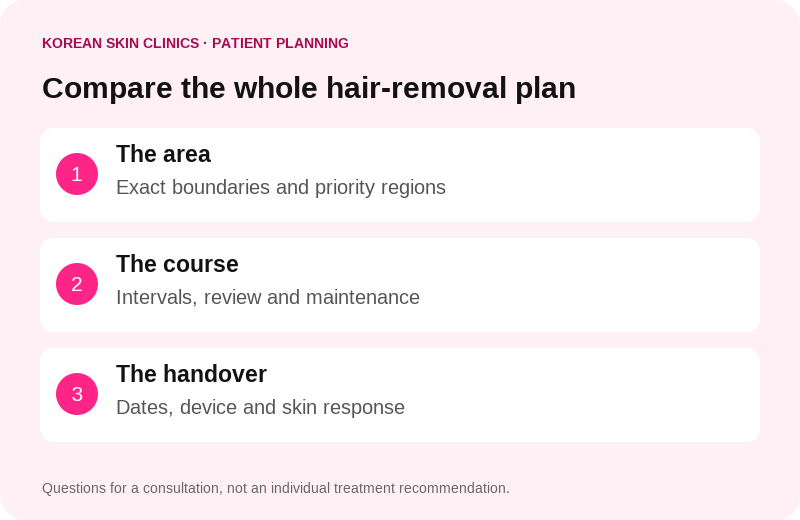
Ask what the quoted area includes: borders, adjacent regions and any exclusions should be clear. Confirm whether consultation, preparation, prescribed aftercare and review are included. A package for a named area can differ from another clinic’s package with the same label, so compare the written scope rather than the headline price alone.
Ask how unused sessions, a postponement or a decision to stop are handled. If your schedule is uncertain, a smaller initial commitment may be easier to evaluate than a long prepaid course. Keep payment terms separate from the clinical plan: a discount does not establish that extra treatment is necessary. Before leaving, obtain the treatment date, area, device information the clinic can provide and a contact route for concerns. That record is especially useful when your next appointment will be in another country.
What the treatment does
Laser hair reduction targets pigment associated with hair follicles. Because hairs cycle through growth phases, a course is usually needed. Wavelength and settings must suit the skin and hair combination. White, gray or very light hair may respond poorly because the relevant pigment target is limited.
Read the evidence: Mayo Clinic: laser hair removal
Who it may suit
The doctor should assess skin tone, recent tanning, hair characteristics and the treatment area. Unusual or rapidly changing hair growth may warrant medical evaluation. A previous burn or pigmentation reaction is important history. Treating darker skin requires appropriate device selection and experience, not simply a lower advertised price.
Read the evidence: Mayo Clinic: laser hair removal
Treatment and recovery
Follow the clinic’s preparation instructions about shaving and avoiding methods that remove the root. Discuss realistic intervals and how a course can continue at home. Redness and swelling around follicles may occur. Maintenance may be needed, particularly in hormonally influenced areas, and complete permanent removal should not be assumed.
Read the evidence: Mayo Clinic: laser hair removal
Risks and warning signs
Burns, blistering, pigment changes, scarring and paradoxical increased hair growth can occur. Eye protection is essential. Do not treat over tattoos without an appropriate specialist plan, since pigment may absorb energy unpredictably.
Read the evidence: Mayo Clinic: laser hair removal
Results, alternatives and the next decision
Hair reduction is a course rather than a one-day transformation. Ask how the clinic distinguishes early shedding from lasting reduction and when photographs or hair counts should be compared. A treatment that works well on coarse dark hair may be less useful on fine or lightly pigmented hair, even in the same person. Different body areas can need different schedules. If results are limited, reassess the hair and skin characteristics rather than assuming that more frequent treatment is the solution. Alternatives may include another appropriate wavelength, electrolysis for suitable hairs or non-laser grooming methods. A sudden change in hair growth may need medical assessment. For international care, avoid restarting a course at every new clinic without sharing previous treatment details. The meaningful outcome is a reduction you consider worthwhile, with acceptable skin tolerance, maintenance requirements and total cost. Complete removal of every hair is not a reliable universal promise.
Read the evidence: Mayo Clinic: laser hair removal
Decide where the remaining course will happen
If you live in the United States, compare a Korea session with a course you can realistically complete near home. Ask whether one visit has a useful role, how later sessions will be timed and whether the device is appropriate for your hair and skin characteristics. Bring previous laser settings when available and tell the clinician about recent tanning or reactions. Keep the treated area, wavelength and response in your records. A package with unused visits may not be a saving once repeat travel is included; do not shorten intervals simply to use the package before departure.
When the goal is fewer razor bumps along the jaw
If the bumps are the reason you are considering laser, start the appointment by showing the skin between shaves. A hair can curve back into the skin and trigger inflammation. That can look like acne, especially after a close shave along the jaw or neck. A clinician may need to distinguish ingrown hairs from acne or an infection before recommending hair reduction. Tell them whether the spots are painful, drain, or leave dark marks or scars. A clear photograph from before the hair was shaved for the appointment can be more informative than an image immediately after a pass with the razor.
Walk through an ordinary work morning. Which way does the hair grow under the jaw compared with the cheek? Do you stretch the skin, go over the same patch repeatedly, or shave against the grain for a closer finish? The American Academy of Dermatology recommends shaving in the direction of hair growth and avoiding skin stretching. When shaving is optional, growing the hair out removes the shaving trigger. If your job requires a close shave, say so. The clinician can help you choose a realistic change and decide whether it helps enough to defer a procedure.
Ask the clinic to separate the expected effects on new ingrown hairs, existing dark marks, and established scars. Reducing further hair growth does not erase every old mark. Agree on the area to photograph and how you will assess both new bumps and irritation after a session. If you are going home before a follow-up visit, take a written description of the device and treated area to your U.S. clinician. The decision about the next session can then reflect how your skin actually responded.
Patient questions
Does laser work well on white or gray hair?
It may respond poorly because the pigment target is limited. Ask whether another method, such as appropriately performed electrolysis, better fits the hair being treated.
Should I wax before laser hair reduction?
Follow the clinic’s preparation instructions; methods that remove the root can interfere with the intended target. Ask specifically about shaving and when to stop other hair-removal methods.