How do laser hair removal and electrolysis differ?
Laser hair removal uses light directed at follicles; electrolysis treats individual follicles electrically. Suitability and practical commitment depend on hair characteristics, skin tone, area and the operator’s assessment. Compare the full appointment course and likely maintenance, not only one session’s price. Ask how to manage hair between visits and whether ongoing care can continue after your Korea trip.
Understand the approaches
Laser hair removal uses light directed at hair follicles, while electrolysis treats individual follicles with an electrical method. Suitability depends on factors including the hair and skin characteristics, treatment area and clinician assessment. Ask which method is appropriate for the hair you actually have rather than assuming the same approach works equally well for every color, density and location.
Bring the hair-removal history
Tell the clinician about waxing, plucking, shaving, previous laser sessions and reactions. Ask what preparation is needed before the proposed method and how existing habits should change. If growth has changed unexpectedly or is associated with other symptoms, ask whether medical assessment is appropriate. The consultation should consider the pattern of growth as well as your cosmetic preference.
Compare the complete course
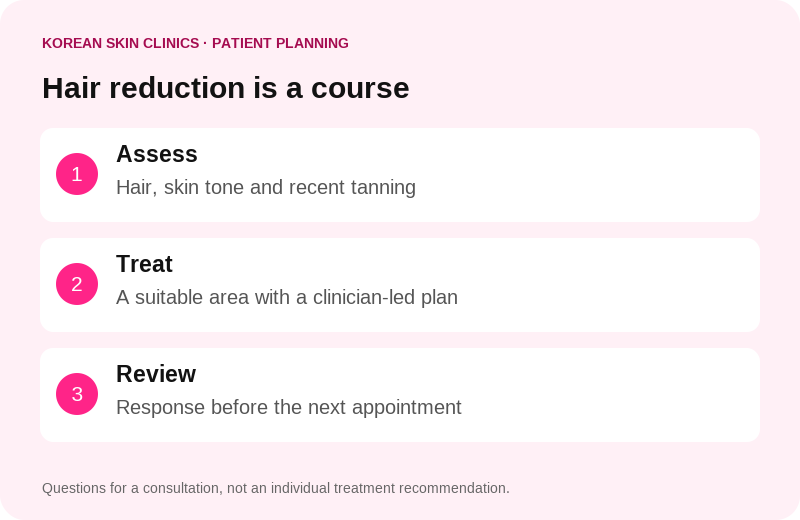
Ask about the expected appointment pattern, length of individual sessions and criteria for continuing. A large area and a small cluster of hairs may create very different practical demands. Discuss whether the course can be completed during travel or needs ongoing appointments at home. Compare the overall plan rather than selecting a method from the price of one session.
Discuss skin response and operator experience
Ask about experience with your skin tone and hair characteristics, appropriate device selection and the management of unwanted effects. Both methods require competent technique and can cause problems when performed poorly. Request an explanation of the risks most relevant to you, such as burns, pigment changes or scarring, and the plan if you develop a reaction. Ask whether a test area is useful.
Define the result honestly
Clarify what reduction or removal the clinician expects, whether maintenance may be needed and how success will be assessed. Avoid interpreting a broad permanence claim as a promise that no hair will ever require attention again. Ask what would lead the clinician to switch methods or stop treatment. A realistic course and review plan are more useful than a universal claim that one method is best.
Compare small areas and large areas separately
Ask the clinician whether the same method makes sense for a broad region and for a few isolated hairs. Appointment length and the number of visits may differ substantially with the area and hair pattern. If your goal includes several regions, request a plan and quote for each rather than assuming one package is the best fit everywhere. This also allows you to start with the priority area and assess your response before committing to a much larger course that may be difficult to complete during travel.
Plan the interval between appointments
Ask how hair should be managed between sessions and which methods should be avoided before the next visit. Get the instructions for your selected treatment rather than applying general advice from another method. Confirm how a missed or delayed appointment affects the course and whether treatment can continue with a provider at home. Keep a record of the device or technique, treated area and response. That information helps another clinician assess the previous course without relying on the broad statement that you have already had hair removal in Korea.
Questions to take to your consultation
Which method fits my hair color, skin tone and treatment area? What appointment course can I realistically complete? How will response be assessed and when would the method change?
Choose a course you can actually complete
For someone living in the United States, the availability of follow-up near home matters when comparing laser hair reduction and electrolysis during a Korea trip. Ask how hair color, skin characteristics and the size of the area affect the proposed method, and distinguish permanent removal of a treated follicle from reduction across an area. Compare the full course and maintenance expectations rather than the price of one session. Keep treatment records if care will move between clinics. Do not let a short itinerary determine the timing of repeat sessions or a method that does not fit the hair being treated.
Patient questions
Should every body area use the same method?
Not necessarily. A broad area and a few isolated hairs may have different practical requirements. Request a separate plan for each priority region.
What if I cannot finish the course during my trip?
Discuss the expected schedule before starting and whether a clinician at home can continue care. Retain the method, area and response records.