What matters when planning a procedure for darker skin?
The diagnosis, skin tone, recent tanning and history of dark or light marks all influence treatment planning. Ask about experience with comparable patients and how the proposed method is individualized. A test area may inform some decisions but cannot remove every risk. Arrange follow-up for pigment changes rather than relying on a device brand or a standard package.
Begin with your goal and your own skin history
People with deeper skin tones can be considered for many skin treatments, but the right choice depends on the condition, the procedure and the individual's response to inflammation. There is no single Korean laser or package that is suitable for every darker complexion. A useful consultation connects your goal to a diagnosis, examines previous pigment reactions and explains the trade-off between likely benefit and unwanted color change.
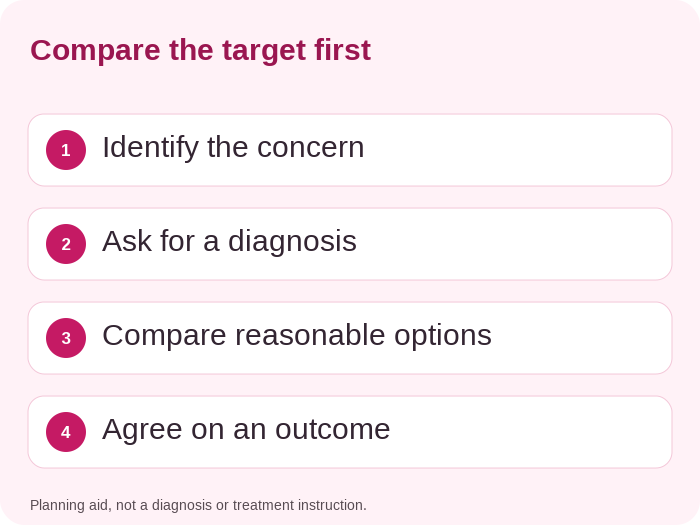
Start by naming what you want to improve: unwanted hair, a flat dark mark, recurring patches, scars or another concern. These are different treatment targets. Tell the clinic that you would like the doctor to assess suitability before you commit to a device. This guide helps you evaluate that assessment and plan follow-up around a Korea visit; it does not ask you to choose laser settings or assign yourself a treatment protocol.
Bring examples of how your skin responds
Prepare a short record of what happened after acne, a rash, a scratch, a burn or a previous procedure. Did the area become darker, lighter or raised? How long did the change persist, and what was done about it? Photographs that show the progression are more useful than a general statement that your skin is sensitive. Include any history of unusual scarring as well as pigment changes.
The AAD explains that inflammation and irritating products can leave dark spots in darker skin tones. That makes the trigger important: treating the remaining color while the original irritation continues can leave a cycle of new marks. Show the doctor both the area you want improved and any ongoing acne or rash. Do not assume every brown patch is the same condition. A consultation should establish what is being treated before comparing procedures advertised for brightening.
Read the evidence: AAD: Dark spots in darker skin
Do not let a skin-type number replace an examination
Clinics may use a skin-type classification as one part of assessment. Ask what other information changes the plan. Your usual complexion, recent tanning, past reactions, treatment area and the condition being addressed are not interchangeable pieces of information. A broad category cannot describe every person's history or every response to a procedure.
Explain recent sun exposure honestly, even if it might lead to postponement. Mention procedures performed elsewhere and products used to lighten or exfoliate the area. You do not need to arrive with a technical label for your skin. A useful question is, “Which findings in my examination affect the approach you are recommending?” The answer should make sense without requiring you to decide intensity, wavelength or needle depth. Technical choices belong with a qualified treating clinician who has assessed you.
Ask about inflammation that photographs may not show
Visible redness is not the only clue to an inflammatory skin problem. The AAD notes that rosacea can be overlooked in darker skin. Describe warmth, burning, flushing, swelling and eye discomfort even when the color change seems subtle in a phone photograph. These symptoms may affect the diagnostic conversation and should not be dismissed because they do not resemble a familiar picture online.
If you are booking from abroad, explain symptoms in words as well as sending any photographs through the clinic's appropriate channel. Say when they occur and whether skincare, heat or a previous treatment appeared to aggravate them. Ask whether the priority is to investigate or settle inflammation before considering an elective procedure. A visit that establishes the underlying condition can be more useful than treating a cosmetic concern while an active problem remains unrecognized.
Read the evidence: AAD: Rosacea in darker skin
Match the technology question to the treatment target
A device name does not tell you what tissue is being targeted or how the treatment will be individualized. Hair reduction, vessel treatment, pigment treatment and scar resurfacing use different approaches even when marketing groups them under lasers. Ask the doctor to explain the target in ordinary language and why the proposed method is suitable for that target in your skin.
For example, the Skin of Color Society discusses long-pulsed 1064-nm Nd:YAG as an option in laser hair removal for darker skin. That does not establish it as the best method for every dark spot or facial concern. Similarly, a device described as picosecond is not automatically suitable for every pigmentation diagnosis. Avoid comparing technologies solely by claims such as newest, strongest or lowest downtime. Request the reasoning for the exact indication, area and intended outcome instead.
Read the evidence: Skin of Color Society: Laser hair removal
Assess the clinician's relevant experience
Ask about experience treating the same concern in people with a comparable skin tone and pigment history. General experience with an international audience does not answer that question. If the clinic shows examples, look for a similar starting problem and a meaningful follow-up interval. An immediate photograph cannot show whether later pigment changes occurred.
Ask who performed the treatment in the examples and who would treat you. Discuss what the clinician does when recovery differs from expectations, not only what a favorable result looks like. You can ask how often they see problems without expecting an unsupported promise that none occur. The aim is a specific explanation of clinical judgment and follow-up. Nationality, a prestigious-looking waiting room or a device partnership does not by itself demonstrate experience with your particular combination of concern and skin response.
Read the evidence: AAD: Questions before cosmetic treatment
Understand what a test area can and cannot answer
Ask whether a test area would provide useful information for the procedure being considered. If it would, ask what the clinician plans to observe, when it should be assessed and how the observation will change the next decision. There is no universal waiting period that this article can apply across devices, indications and individual histories.
A reassuring test is not a guarantee that a larger treated area will behave identically or that later color change cannot occur. You still need an explanation of full-treatment risks and aftercare. If you are leaving Korea before the proposed observation period ends, discuss consultation now and treatment later. Paying for a package should not create pressure to skip a useful decision point. A smaller or staged plan may be discussed, but it should be a clinical choice rather than an improvised compromise around a flight.
Compare alternatives without assuming any procedure is risk-free
Ask about the reasonable alternatives, including medical treatment, skincare changes, observation or no elective procedure. If one approach is recommended over another, ask which benefits and risks drive that choice. Needling, peels and lasers differ, but the absence of a laser does not mean pigment risk disappears.
The US FDA's microneedling information identifies darker or lighter patches among possible effects and notes that some authorized devices were not studied in darker skin types. This is US device-specific safety information, not a statement about Korean approval. Its practical lesson is to ask about evidence for the particular device and use, rather than accepting “safe for all skin types” as a complete explanation. Ask what an unwanted color change could mean for recovery, further treatment and cost before deciding whether the potential benefit is worth it to you.
Read the evidence: FDA: Microneedling devices
Design the Seoul itinerary around review
Bring your arrival date, departure date and onward plans to the consultation. Ask which review needs an examination and which questions, if any, can be addressed remotely. A convenient appointment length is not the same thing as a completed recovery period. Color changes may not be fully assessable while you are still in Korea.
Leave room to change the itinerary if the doctor recommends a different sequence. If your visit cannot support the necessary observation or review, consultation alone remains a valid outcome. Ask what information would help your clinician at home continue the assessment. A plan is more reassuring when the team can explain how uncertainty will be handled after departure. The CDC's medical-tourism guidance emphasizes records and continuity; those practical details matter just as much when the initial procedure seems relatively minor.
Read the evidence: CDC: Medical tourism
Make aftercare explicit and keep changes interpretable
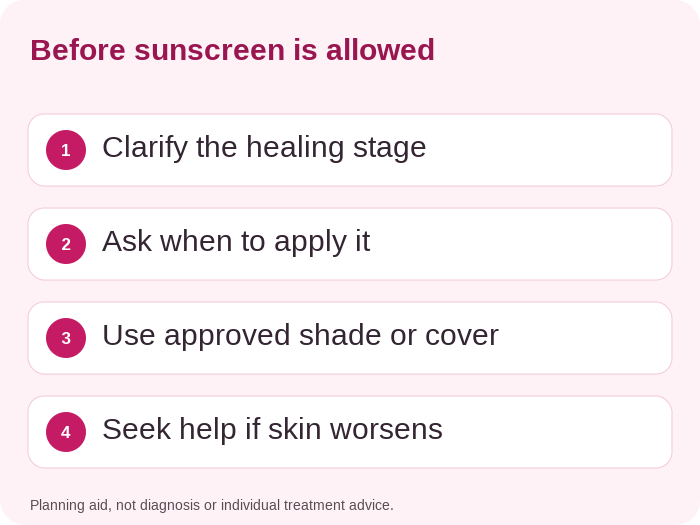
Ask for instructions that cover cleansing, moisturizing, sun protection, makeup, usual active products and any dressings relevant to your actual procedure. Do not apply another person's recovery timetable to a different treatment. Tell the clinic which recommended products you can obtain and whether you have reacted to similar ingredients before. A routine you can follow matters more than an impressive bag of unfamiliar products.
Keep a dated record if a new patch or symptom appears, and contact the clinic for advice rather than immediately adding a stronger lightening product or exfoliant. The AAD notes that irritating products can themselves contribute to dark marks. Ask which symptoms require prompt examination and how to obtain it locally. If a problem is severe or rapidly worsening, do not wait for a cosmetic follow-up message to be read before seeking appropriate medical assessment.
Read the evidence: AAD: Dark spots in darker skin
Put a clear decision on paper
Before consenting, ask for a short written plan: the diagnosis, treatment target, proposed approach, alternatives, expected limitations and review arrangements. Record which parts are definite and which depend on the response. If the quotation contains several procedures, ask for the purpose of each and the cost of proceeding in stages. The price of an initial session does not describe the possible cost of managing an unwanted result.
Consider what degree of uncertainty you are comfortable accepting. You may decide that improving a small concern is not worth a risk of persistent pigment change, or you may decide that a carefully explained plan fits your priorities. Either decision can be reasonable. The useful outcome is informed consent based on your own circumstances, not a feeling that you must complete a treatment because you traveled to Korea.
A relevant consultation option to investigate
Delight Dermatology Clinic lists pigmentation and other skin-condition services. Its official biography identifies Dr. Yun Sang Youl as a dermatology specialist and includes pigmentation disorders and laser therapies among his areas of practice. The clinic and doctor are both listed in Korean Skin Clinics, making them a relevant starting point for an assessment conversation.
Before booking, ask specifically about experience with your skin tone and the concern you want addressed. Published service listings alone do not answer that question. Use the internal profiles below to review the background, then contact the international website about a consultation. Ask who will examine you, what language support is available and whether a staged assessment is feasible during your dates. This recommendation is based on relevant published services, not a claim of superior outcomes or a verified darker-skin caseload.
Read the evidence: Delight: International clinic website · Delight: Dr. Yun Sang Youl biography
Discuss your own pigment history rather than nationality
U.S. patients have diverse skin tones and histories; neither nationality nor a clinic's location predicts how an individual skin type will respond. Bring records of darkening, lightening or scarring after past treatments and ask about the clinician's experience with comparable concerns and skin characteristics. Discuss whether a test area and later review would change the plan, especially if you will return home before delayed pigment changes can be assessed. Ask for unfiltered examples with comparable lighting, and keep the settings and treated area for follow-up. Do not interpret a generic skin-type label as a guarantee of suitability.
Patient questions
Is picosecond laser automatically safe for darker skin?
No device label establishes suitability for every diagnosis or complexion. Ask what the clinician is targeting, how your history affects the approach and which alternatives are reasonable.
Does a test area guarantee the final result?
No. Ask what the test can inform, when it will be assessed and what uncertainty remains before treating a larger area. The full treatment still needs consent and follow-up.
Does an international website prove darker-skin experience?
No. Ask about experience with your skin tone and exact concern, who will treat you and how later pigment changes are assessed. An international booking service answers a different question.
What if my stay is too short for review?
Discuss consultation only, a later visit or another clinician-led plan that fits the required observation. Travel dates should not determine an unsuitable treatment interval.