What does pico laser treatment in Korea actually treat?
Picosecond laser treatment can target selected pigment concerns; fractional handpieces may instead be used for texture. The diagnosis, wavelength and settings determine the purpose and recovery. A pico package does not guarantee melasma clearance or suit every skin tone. In Korea, ask which concern is being treated, whether a test spot is appropriate and how follow-up will work.
What the treatment does
Picosecond devices deliver extremely brief pulses that fragment targeted pigment. The wavelength and handpiece determine what tissue is being treated: a spot-focused pigment session is different from fractional treatment intended to remodel texture. A branded pico package therefore does not describe one standard procedure. Ask which diagnosis the doctor is targeting and how the chosen wavelength matches it.
Who it may suit
Discrete sun spots, some tattoo pigments and selected pigment disorders may be considered. Melasma needs particular caution because lightening pigment does not remove its tendency to recur. New, changing or irregular brown lesions need medical assessment before cosmetic destruction. A darker skin tone or recent tan changes the safety discussion rather than automatically ruling treatment in or out.
Treatment and recovery
Photographs and, where appropriate, a test area give a useful baseline. Targeted spots may temporarily look darker or form fine crusts. A gentle fractional protocol can produce a different recovery pattern. Staged sessions allow the response to be assessed before increasing treatment intensity. Compare photographs after inflammation has settled, rather than judging on the treatment day.
Risks and warning signs
Pain, redness, swelling, pigment changes and burns are possible. Aggressive treatment can worsen discoloration or leave pale patches. Eye protection must match the wavelength. Report blistering, worsening pain or spreading redness promptly rather than adding exfoliating products.
Results, alternatives and the next decision
Separate pigment clearance from a change in overall skin quality. If the target is a particular brown spot, compare that spot in the same lighting and at the same distance after healing. If the goal is texture, ask for a different measure rather than treating any brighter photograph as proof of collagen change. Results from tattoo removal do not establish results for melasma simply because both involve pigment. The alternative may be a topical regimen, a different wavelength, observation or assessment of a lesion before any cosmetic treatment. A useful next-step decision asks whether the response supports continuing the same protocol, adjusting it or stopping. For a first visit, discuss treating a small representative area if uncertainty remains. Do not judge a whole course by the strongest promotional before-and-after photograph: ask to see the range of outcomes in patients with a similar concern, skin tone and recovery allowance.
Plan the visit around diagnosis
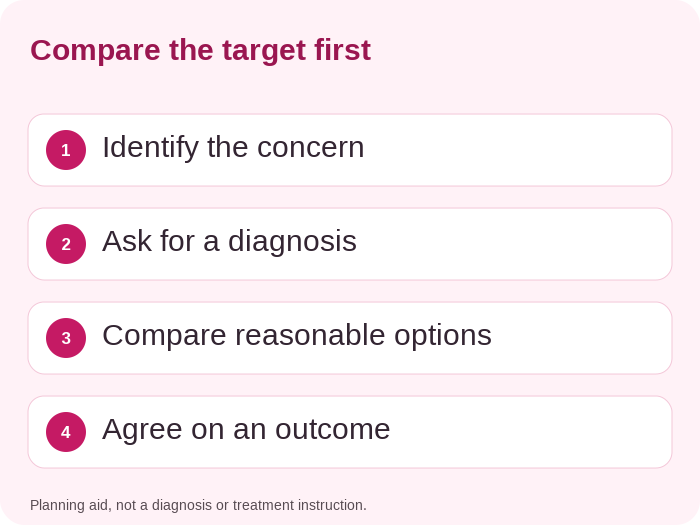
Bring photographs from before the pigment appeared, a list of previous laser names if available, and the products that have caused irritation. Ask the clinic to write down the diagnosis and distinguish the primary treatment from optional add-ons. For a visitor, it is useful to ask whether a test area and later review would be more sensible than treating the whole face immediately. Consider the timing of outdoor sightseeing, long flights and a return-to-work event. A package that uses every available day in Seoul may leave no opportunity to assess a delayed reaction. Reserve time for review instead of assuming that a last-day appointment is convenient. Keep copies of treatment settings or the procedure record where the clinic can provide them; these can help another clinician understand a later reaction.
Questions for your consultation
Ask whether your pigment is epidermal, dermal or mixed; whether a test spot would change the plan; and what outcome would lead the doctor to stop rather than sell more sessions.
Comparing a quote in Korea
For picosecond laser, compare pigment versus fractional handpiece, area treated, test spot and number of review-led sessions. Ask for these items in writing so a lower headline price does not conceal a different scope of care. Confirm which follow-up visits are included and what happens if the clinician changes the plan after examining you. Discuss costs after agreeing on the diagnosis and realistic goal; a package should not determine how much treatment you receive.
Compare the actual laser protocol before traveling
If you have had a pico treatment in the United States, bring its device name, wavelength and purpose rather than asking a Korean clinic to repeat a brand name. Spot treatment, toning and fractional treatment are different appointments. Ask whether your first Seoul visit should be an assessment or test area, with a later decision about full treatment. For a quote comparison, list the treatment area and handpiece next to the price in Korean won; convert to U.S. dollars only with a dated rate and your payment fees. Keep the procedure record for the clinician who will assess any delayed pigment change after you return.
Patient questions
Is pico laser the same as laser toning?
No. Pico describes pulse duration, while toning describes a treatment approach. Ask for the device, wavelength, handpiece and intended target rather than comparing package names alone.
Can I fit a complete pico course into one Seoul visit?
Not necessarily. A first visit may establish suitability or allow one treatment; the next session should depend on healing and response, not the length of your holiday.