What is the difference between laser and IPL skin treatment?
Lasers use a particular wavelength or defined wavelengths, while IPL delivers broader filtered light. The relevant comparison is the exact application for your diagnosis, skin tone and treatment area, not a universal ranking of technologies. Ask what each option targets, how many visits are proposed and how risks, recovery and follow-up differ for your skin.
Choose the target before choosing the machine
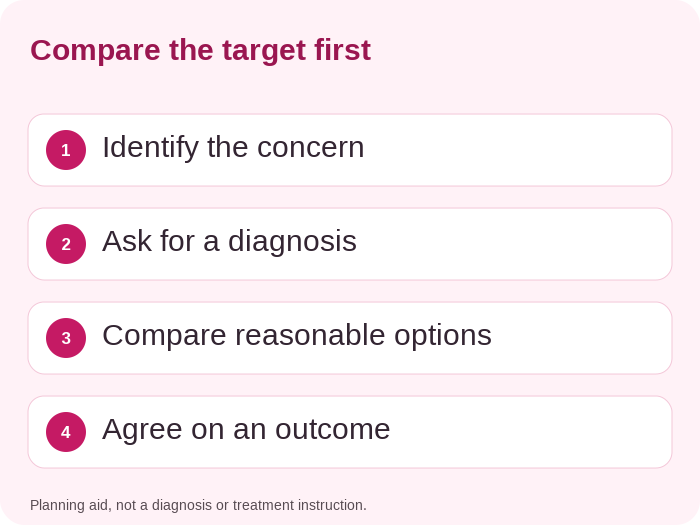
When comparing laser and intense pulsed light, begin with the specific feature you want assessed: a persistent red area, an individual brown spot, unwanted hair, uneven texture or another concern. These are not interchangeable treatment targets. A dermatologist should examine your skin and explain the diagnosis and whether either approach is appropriate. A device name or a discounted package does not identify the problem on its own.
Laser devices use selected wavelengths of light, while IPL delivers a broad range of light filtered for a particular application. Both are broad categories containing different devices and treatment settings. The distinction alone does not tell you which is safer or more effective for your condition. Ask about the proposed device, the target, the operator and the plan for your own skin.
Separate pigmentation, redness and texture
A brown spot may need medical examination before any cosmetic light treatment. A changing, growing or bleeding lesion should be assessed rather than treated as a routine cosmetic spot. Pigment may also have more than one cause; a broad promise to brighten the whole face does not establish that a proposed light treatment is suitable for each area.
Persistent redness, visible vessels and inflammatory bumps can also have different causes. The AAD describes laser and light treatment as possible components of rosacea care, but they do not replace every other part of a care plan. Texture and depressed acne scars raise still different questions. Ask the examining clinician to identify which feature each proposed treatment targets and what it is not expected to change.
Understand why settings and experience matter
Two treatments described with the same marketing term may differ in wavelength or filters, delivered energy, pulse duration, cooling, treatment area and operator technique. Those details are not a do-it-yourself recipe. They are reasons to ask the clinician how the approach is selected for your diagnosis, skin and recent sun exposure. Ask who will perform the treatment, what training they have and who manages complications.
Tell the team about medicines, photosensitivity, previous procedures, cold sores and your tendency to bruise or develop pigment changes. The AAD recommends discussing relevant medicines and medical conditions before light-based rosacea treatment. Provide a complete history rather than assuming that an apparently noninvasive procedure cannot interact with it.
Make your skin and healing history part of the choice
If a burn or inflammation has left persistent dark or pale marks before, bring that information to the consultation. Discuss your skin tone, recent tanning and any prior treatment reaction. A clinician may consider a test area in some situations, but a test cannot guarantee the outcome across a larger area or a later session. Ask what would prompt a change of settings or a decision not to proceed.
Discuss foreseeable temporary effects, including redness, swelling or irritation, as well as less common but important complications such as burns, persistent pigment change or scarring. The risk depends on the individual and procedure. Do not accept a blanket claim that either laser or IPL is risk-free or universally suitable for every skin tone.
Compare the total plan rather than the first appointment
For each proposed approach, ask what the consultation includes, what a treatment session costs, whether more sessions may be needed, and how response is assessed. Separate consultation, procedure, medicines, recovery products and review visits in the quotation. If a package is suggested, ask what happens if you experience a reaction, cannot return on schedule or decide that the first session did not meet the agreed goal.
Consider a staged plan rather than assuming that several procedures should occur on the same day. Ask the clinician which part addresses your highest priority, how long skin needs to settle and when a second intervention would be reconsidered. The safest timing is individual; online package descriptions cannot establish it.
Plan sun protection and follow-up before you travel
A Korea itinerary can include long walks, outdoor sightseeing and a flight soon after treatment. Explain these plans before booking a procedure. Ask for written instructions on sun exposure, skin care and the activities relevant to the specific treatment. The AAD emphasizes sun protection after laser or light treatment for rosacea. If you cannot realistically follow the plan while traveling, ask whether to change the date or postpone.
Before leaving, request the diagnosis, device and treatment details, aftercare instructions and a contact route. Ask which symptoms require urgent in-person care and what to do after you return home. A photograph or a message to a clinic is not a substitute for urgent local assessment when the clinic advises immediate care.
How to compare consultation answers
Write the same short list of questions for each consultation so that the answers are comparable. Ask each clinician to name the feature they are treating, the procedure proposed and the expected sequence of assessments. Record the alternatives, foreseeable healing and what would make them change course. If one plan includes several treatments, ask for a price and purpose for each component rather than comparing only package totals.
Bring the written plan home and check whether the follow-up arrangements fit your location. An overseas consultation can identify options, but a plan that requires repeated appointments is useful only if you can attend them or arrange an appropriate handover. Avoid choosing solely on a photograph, the device brand or a countdown offer. Ask whether a treatment can be postponed while you discuss medical concerns with your usual clinician. A clinician should explain uncertainty and allow you to make an informed choice.
A relevant listed option and what to verify
Maylin Cheongdam is listed on this platform, and its international Rosacea & Redness Care service describes assessment of redness and use of light-based technologies for selected concerns. It may be relevant when facial redness is your main question. Review the service and clinic profile, then ask whether the clinician offers the specific assessment or device you want to discuss and what alternatives may suit you.
This is a service-based suggestion, not a ranking, endorsement of every claim on a clinic website or a promise of benefit. If the concern is an unexplained changing spot, first ask whether the clinic provides the necessary medical examination and referral pathway. You can seek another opinion or decide against a procedure.
Questions to take to the appointment
What is the diagnosis? What exact feature is the proposed light or laser intended to address? Which alternatives, including no procedure for now, are reasonable? What is the likely course of recovery, and how will my recent sun exposure or history of pigment change alter the plan? Who performs treatment and who reviews a problem?
Ask for the expected number of assessments and an itemized estimate rather than only a per-session price. Request a copy of the agreed plan in language you understand. If you do not understand the differences or feel rushed, pause and ask for clarification before paying. A thoughtful consultation is valuable even if it ends with a decision to wait.
Understand the distinction
Laser systems deliver a particular wavelength or defined set of wavelengths, while intense pulsed light uses a broader range of light filtered for the intended application. Neither label identifies one universal treatment. A clinic may use different systems for pigment, vessels, hair or other concerns. Ask what the device is intended to target in your skin before comparing the two categories.
Use your diagnosis as the comparison
A meaningful comparison starts with the same concern and treatment area. Ask whether the finding is a discrete pigmented lesion, a vessel-related change or a broader pattern that needs another approach. A device suitable for one finding may not be appropriate for another. Ask the clinician why the selected wavelength or light system fits the diagnosis and how your skin tone and recent exposure affect the plan.
Compare complete treatment courses
Request the expected number of appointments, interval between them, recovery requirements and point at which response will be judged. A lower per-session price may not reflect the total course. Ask what will happen if the first treatment produces limited improvement or unwanted pigment change. Compare the proposed course and follow-up rather than assuming a device category determines value by itself.
Discuss the shared and specific risks
Laser and light procedures can involve pain, swelling, pigment changes, burns, infection or scarring depending on the intervention. Ask which risks are most relevant to your case and what measures are used to reduce them. Clarify eye protection and who performs the treatment. A claim of minimal downtime should not replace a discussion of possible complications or the response pathway.
Make the final choice understandable
You should be able to explain why one approach is recommended for you and what would make the clinician choose differently. Ask whether a test area is useful and whether another option, including medication or observation, should be considered. If the answer remains a broad assertion that one machine is better, request a more specific connection between the examination findings and the proposed plan.
Compare the target and protocol across countries
A U.S. laser quote and a Korean IPL package may address different findings even if both promise a more even tone. Ask each clinician to identify the target, device, treated area and expected visible recovery. Bring prior treatment records and distinguish a pigment spot from diffuse redness or another diagnosis. Compare the alternatives after examination rather than choosing a technology by price alone. If returning home before the next review, request the details needed for a clinician there to assess your response without having to infer the treatment from a marketing name.
Patient questions
Is IPL suitable for every brown patch?
No. A brown patch needs a diagnosis; melasma, isolated spots and post-inflammatory marks are not interchangeable targets.
Should I choose the device with the most shots?
No. Shot counts need context about the system, area and clinical plan. Ask why the proposed coverage is appropriate.