Can pulsed dye laser cure rosacea?
Pulsed dye laser can reduce selected visible vessels and persistent redness, but it does not cure the underlying tendency to rosacea. Flushing, inflammatory bumps or eye symptoms may need separate care. Settings influence bruising and recovery. A consultation should distinguish these features and define the vascular target before recommending a laser course in Korea.
What the treatment does
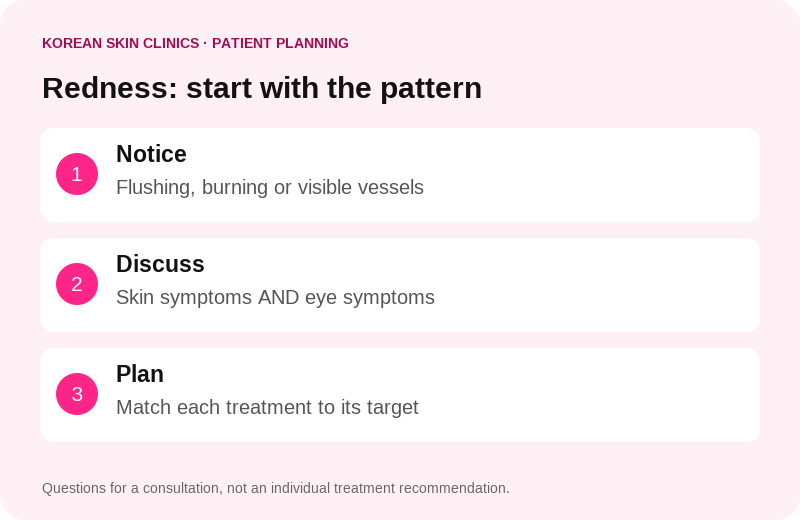
A pulsed dye laser is designed to target hemoglobin within blood vessels. It can therefore address certain red vascular features rather than brown pigment. Treatment parameters influence whether bruising occurs. The consultation should separate discrete visible vessels from flushing, inflammatory bumps and other causes of a red face.
Who it may suit
People with visible facial vessels or persistent rosacea-associated redness may be candidates. It does not cure the underlying tendency to rosacea or replace treatment for eye symptoms and inflammatory lesions. Patients who flush without fixed vessels may have different expectations. Any unexplained new lesion should be diagnosed before cosmetic treatment.
Treatment and recovery
Ask whether the planned protocol is likely to cause purpura, the purple bruising that can follow vascular treatment. A course may be needed and recurrence can occur. Document the baseline in consistent lighting because redness varies with heat, exercise and emotion. Schedule a review after transient redness or bruising has resolved.
Risks and warning signs
Swelling, bruising, pigment change, burns and rare scarring are possible. Eye-area treatment requires appropriate protection and expertise. A history of darkening after inflammation should be part of the risk discussion rather than discovered after the first session.
Results, alternatives and the next decision
Persistent redness and visible vessels are related but separate outcomes. Ask the clinician to mark which vessels are likely to respond and which symptoms may remain even if those vessels become less obvious. Flushing triggered by temperature or emotion may still occur. Medical rosacea treatment, gentle skin care and management of individual triggers can remain relevant. An alternative vascular device or IPL may be considered depending on the target, skin tone and expertise available; a brand comparison alone cannot settle the choice. For outcome photographs, avoid comparing a hot, irritated baseline with a cooled post-treatment face. Use similar temperature, lighting and timing where possible. If the proposed setting causes bruising, ask whether the expected additional benefit is meaningful for your specific concern and whether a less bruising protocol would be reasonable. The answer should reflect the clinical target rather than a preference for producing a dramatic immediate reaction.
Record the pattern of redness
Before consultation, note whether the redness is constant or comes and goes, which triggers bring it on and whether there are eye symptoms, bumps, burning or scale. Take photographs in consistent lighting on both a calm and a symptomatic day. This gives the clinician more information than a single office examination after a warm journey. Ask for separate goals for visible vessels, background redness and symptoms. If a procedure addresses only one component, clarify what treats the others. Plan an appropriate follow-up interval rather than comparing the skin immediately after cooling. Retain details of the device and treatment dates so another doctor can understand the course. For an international visit, ask which symptoms need local in-person care after you return home.
Questions for your consultation
Ask what proportion of your visible redness appears vascular, what remains medically treatable, and how the doctor will judge improvement despite daily fluctuations in flushing.
Comparing a quote in Korea
For pulsed dye laser, compare vessel distribution, bruising versus less-bruising protocol, treatment area and review interval. Ask for these items in writing so a lower headline price does not conceal a different scope of care. Confirm which follow-up visits are included and what happens if the clinician changes the plan after examining you. Discuss costs after agreeing on the diagnosis and realistic goal; a package should not determine how much treatment you receive.
Ask what visible recovery will look like
For a return to the United States, discuss the planned pulsed dye laser endpoint: ask whether bruising is intended or expected and how the clinician will assess recovery. A description such as redness laser does not answer that question. Bring your history of rosacea treatment or vascular procedures and distinguish persistent redness from flushing or other symptoms. Schedule any required review before departure and ask how to share photographs securely afterward. A remote photograph should not be your only plan if pain or another concerning change needs an in-person examination.
Patient questions
Will pulsed dye laser cause purple bruising?
Some protocols cause purpura, or purple bruising, while others seek a less bruising response. Ask what is planned and whether the expected benefit justifies the visible recovery.
Why can redness still fluctuate after vessel treatment?
Daily flushing and inflammation can persist even when fixed vessels improve. Assess the treated vessels under similar lighting and temperature rather than comparing a hot baseline with a cooled face.