What is long-pulsed Nd:YAG vascular treatment used for?
Long-pulsed Nd:YAG treatment may target selected vessels, depending on their size, depth and location. It differs from Q-switched pigment toning despite the related laser name. Facial vessels and leg veins require different assessments, and some vascular concerns need specialist evaluation. Ask why the proposed device suits the particular vessel and how healing will be reviewed.
What the treatment does
Long-pulsed Nd:YAG treatment delivers energy differently from Q-switched pigment treatment, even though both can use the same wavelength family. The long-pulsed approach may target selected vessels at greater depth. Vessel size, location and blood flow influence whether this is an appropriate option.
Who it may suit
A clinician should examine the vessel rather than choose a package based on its color alone. Facial vessels, leg veins and vascular lesions are not interchangeable indications. A raised, bleeding or rapidly changing lesion needs diagnosis. Some vascular problems are better assessed by a different specialist or managed with another procedure.
Treatment and recovery
The doctor should explain the endpoint sought during treatment and how cooling protects nearby skin. A test area and follow-up may be useful in uncertain cases. Results should be evaluated after swelling and inflammation settle. Never equate a painful session or immediate darkening with successful long-term vessel clearance.
Risks and warning signs
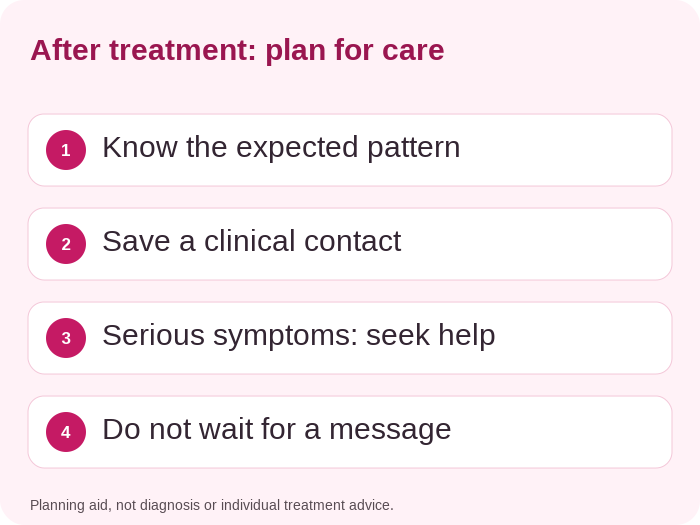
Pain, burns, ulceration, pigmentation changes and scarring are possible if energy is poorly matched to anatomy. Appropriate eye protection is essential. Persistent pain, skin breakdown or expanding discoloration needs prompt review.
Results, alternatives and the next decision
The first useful comparison is between treatments for the same type of vessel. A device suitable for one depth or vessel size may not be the best choice for a different lesion. Ask whether the doctor expects the vessel to close, become less visible or need repeated treatment, and what happens if it returns. Some vein problems need assessment beyond the skin surface, so cosmetic treatment should not conceal symptoms that warrant investigation. For facial work, ask how the chosen approach compares with a pulsed dye laser or another vascular option. For larger or lower-limb vessels, ask whether a different specialist or technique is appropriate. Photograph the exact vessel before treatment and compare it after healing, not while swelling or discoloration obscures it. If a first attempt produces skin injury without the desired vessel response, reassessment is more useful than simply increasing energy at the next appointment. Ask whether photographs alone are sufficient for follow-up or whether the vessel needs examination in person, particularly if discomfort or skin breakdown develops.
Record the pattern of redness
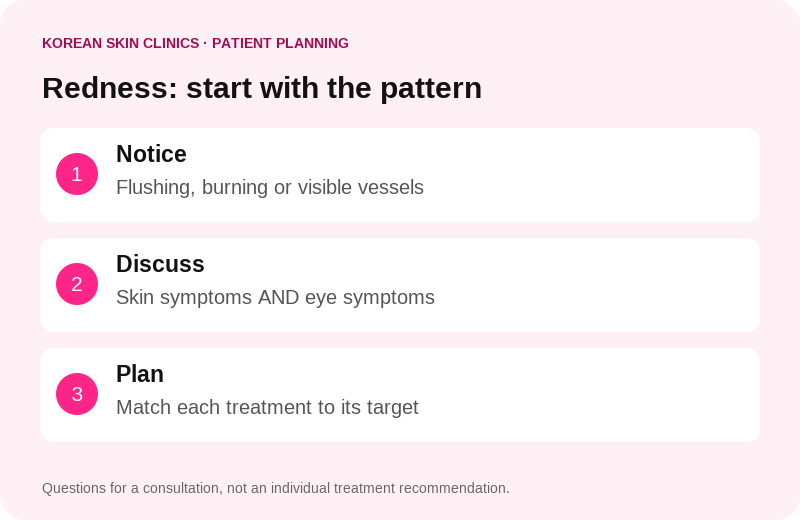
Before consultation, note whether the redness is constant or comes and goes, which triggers bring it on and whether there are eye symptoms, bumps, burning or scale. Take photographs in consistent lighting on both a calm and a symptomatic day. This gives the clinician more information than a single office examination after a warm journey. Ask for separate goals for visible vessels, background redness and symptoms. If a procedure addresses only one component, clarify what treats the others. Plan an appropriate follow-up interval rather than comparing the skin immediately after cooling. Retain details of the device and treatment dates so another doctor can understand the course. For an international visit, ask which symptoms need local in-person care after you return home.
Questions for your consultation
Ask why this wavelength and pulse duration suit the particular vessel, whether an alternative vascular laser is preferable, and whether the problem requires medical investigation beyond cosmetic care.
Comparing a quote in Korea
For long-pulsed nd:yag vascular treatment, compare vessel size and location, test area, specialist assessment if needed and follow-up for skin injury. Ask for these items in writing so a lower headline price does not conceal a different scope of care. Confirm which follow-up visits are included and what happens if the clinician changes the plan after examining you. Discuss costs after agreeing on the diagnosis and realistic goal; a package should not determine how much treatment you receive.
Identify the vessel problem before comparing devices
A U.S. clinic may use Nd:YAG for a different purpose than the vascular treatment proposed in Seoul. Ask the Korean clinician to name the diagnosis, treatment site and intended vessel target. Bring records of previous vascular or hair-removal laser sessions so similar device names do not obscure different treatments. If leg veins are the concern, ask whether additional assessment is needed before a cosmetic procedure. Arrange a clear plan for review after returning home and obtain a record that states the wavelength and treated area, not only the brand or package name.
Patient questions
Is this the same treatment as Nd:YAG laser toning?
No. Pulse duration and treatment purpose differ. A pigment-toning package should not be assumed equivalent to a protocol targeting blood vessels.
Should all visible leg veins be treated at a skin clinic?
No. Symptoms or the vein pattern may warrant vascular assessment. Ask whether the problem needs investigation beyond cosmetic treatment of the visible surface.