Is IPL a suitable choice for pigmentation and redness?
IPL uses filtered broad-spectrum light and may address selected superficial pigment and visible vessels. It is not a laser or a universal brightening treatment. Suitability depends on the diagnosis, skin tone, tanning and settings. Melasma and inflammatory redness need particular care. Ask a clinician to identify the target before choosing an IPL package in Korea.
What the treatment does
Intense pulsed light uses filtered bands of light rather than a single laser wavelength. Depending on the settings, the intended targets may include superficial pigment or small vessels. Treatment names such as photofacial can hide important differences in filter selection, pulse structure and energy. Ask the clinic to identify the actual concern and device used.
Who it may suit
IPL may suit a combination of sun-related discoloration and some visible redness, but it is not a universal brightening treatment. Tanned skin, pigment-prone skin and melasma require particular assessment. Active inflammatory disease may need medical treatment first. A suspicious spot should not be covered by a routine full-face cosmetic pass.
Treatment and recovery
A consultation should review recent sun exposure and photosensitizing medicines. Treated brown spots may darken before fading. Redness may improve gradually across a planned course. Avoid assessing success by how intense the immediate skin reaction looks: a stronger reaction is not an assurance of a superior result.
Risks and warning signs
Burns, blistering, uneven pigmentation and eye injury are possible. Appropriate eye protection and cooling are part of treatment. Recovery varies with the target, settings and skin tone, so a single promise of zero downtime is not reliable.
Results, alternatives and the next decision
Choose the target before comparing devices. A face with a mixture of brown spots and red vessels may need different settings, or different treatments, for those features. Ask whether combining them in one appointment reduces precision or increases the recovery burden. A pigment-focused laser or a vascular laser may be a more specific alternative in some situations; medical treatment may be better when inflammation is the main issue. When reviewing results, compare individual spots and fixed vessels rather than a general impression of radiance. The clinic should explain whether the goal is fewer visible marks, less background redness or both. A low price per full-face session does not make a broad treatment preferable to a small, targeted one. Ask whether follow-up photographs will be taken before another session and whether the plan changes if the first treatment produces irritation without meaningful improvement.
Plan the visit around diagnosis
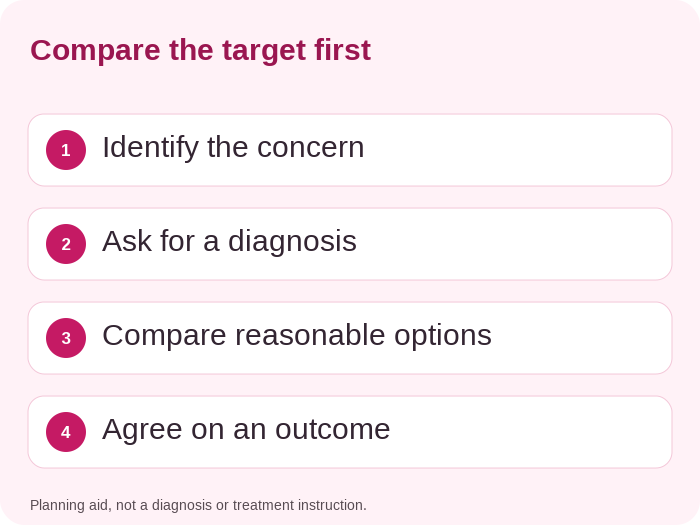
Bring photographs from before the pigment appeared, a list of previous laser names if available, and the products that have caused irritation. Ask the clinic to write down the diagnosis and distinguish the primary treatment from optional add-ons. For a visitor, it is useful to ask whether a test area and later review would be more sensible than treating the whole face immediately. Consider the timing of outdoor sightseeing, long flights and a return-to-work event. A package that uses every available day in Seoul may leave no opportunity to assess a delayed reaction. Reserve time for review instead of assuming that a last-day appointment is convenient. Keep copies of treatment settings or the procedure record where the clinic can provide them; these can help another clinician understand a later reaction.
Questions for your consultation
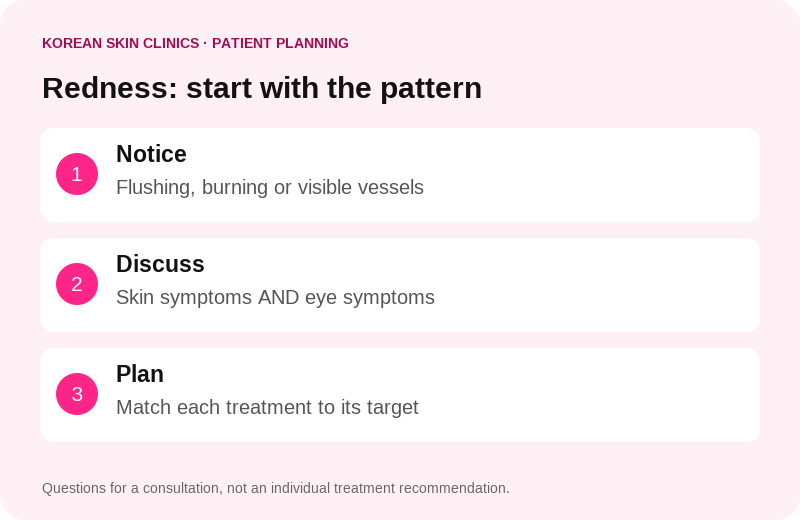
Ask which filter is intended for your concern, whether a test area is sensible, and whether your redness represents vessels, inflammatory rosacea or another condition requiring a different plan.
Comparing a quote in Korea
For ipl photofacial, compare filter and target, spot versus full-face treatment, cooling and planned review. Ask for these items in writing so a lower headline price does not conceal a different scope of care. Confirm which follow-up visits are included and what happens if the clinician changes the plan after examining you. Discuss costs after agreeing on the diagnosis and realistic goal; a package should not determine how much treatment you receive.
Use your U.S. treatment history to compare IPL
An IPL photofacial quote is not directly comparable with a laser quote or with every photofacial offered at home. Bring the name of any previous IPL device and describe whether the goal was brown spots, visible vessels or diffuse redness. Ask the Seoul clinician to identify the target and anticipated visible reaction separately. Tell the clinic about outdoor activities planned in Korea and after your return to the United States. Request written instructions about sun exposure and restarting your usual products rather than relying on a package description of no downtime.
Patient questions
Is IPL better than a pigment laser?
Neither is universally better. The choice depends on the pigment diagnosis, vessel component, skin tone and device settings; a more specific laser may suit a particular target.
Will I have no downtime after an IPL photofacial?
Zero downtime cannot be promised. Redness, swelling or temporary darkening of treated spots may affect plans, while burns or blistering need medical review.