Finding your appointment
Dermatology is on level B3 of the Daehan Outpatient Building (대한외래). The International Healthcare Center is on the second floor of the main hospital building. Check your appointment confirmation for the first place you need to go.
Dermatology floor map · Directions to the International Healthcare Center
What does SNUH Dermatology treat?
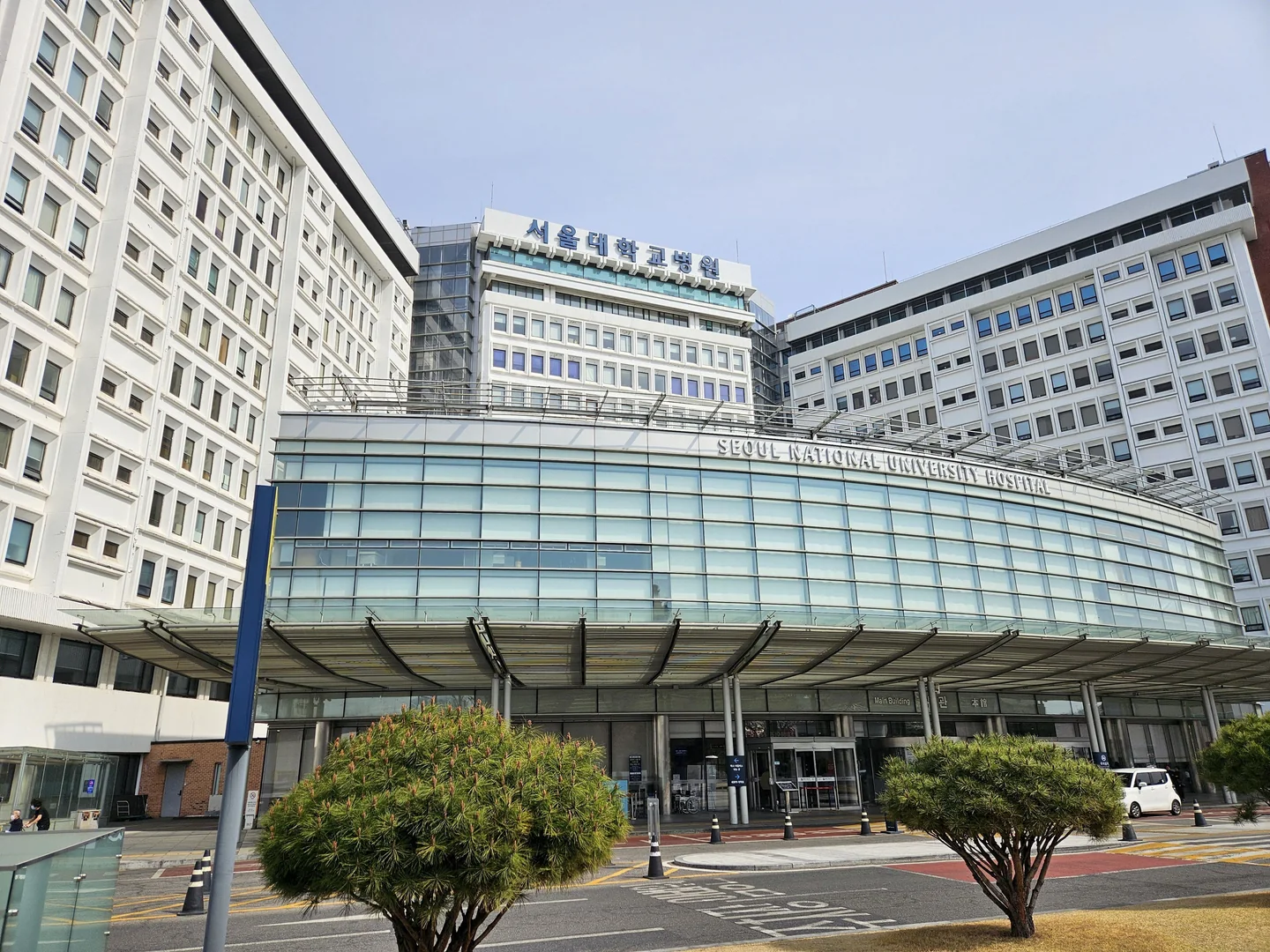
Seoul National University Hospital’s dermatology department is based at its Jongno campus, 101 Daehak-ro. Its published scope includes eczema, psoriasis, acne, rosacea, pigment disorders, hair and nail conditions, scars and skin cancer. It is a medical dermatology service with an international appointment pathway, so the initial request should describe the clinical problem and any previous diagnosis.
A medical dermatology destination in Jongno
Seoul National University Hospital’s main campus is at 101 Daehak-ro in Jongno-gu, Seoul. Its dermatology department describes a broad medical practice covering eczema, psoriasis, acne and sebaceous-gland disorders, pigmentary disease, hair and nail problems, scars, connective-tissue disease and skin cancer. The department also works in research and medical education. For a patient, this breadth makes the hospital worth considering when the main question is diagnosis or management of a persistent disease rather than a preselected cosmetic package. State the medical problem clearly when requesting an appointment so the team can route the request appropriately.
Match the problem to the clinical focus
The hospital’s doctor directory separates areas of practice. It lists acne and sebaceous-gland disease under Suh Dae Hun, hair and scalp conditions under Kwon Ohsang, psoriasis under Jo Seong-Jin, eczema and allergic skin problems under Lee Dong Hun, and skin cancer, nail disease and dermatologic surgery under Mun Je-Ho. These listings help frame an appointment request; they are not a promise of availability or an instruction to self-diagnose. If a concern overlaps several categories, describe the symptoms and previous diagnoses rather than deciding which specialty label must apply. Ask the hospital which physician or clinic is appropriate for the first assessment.
How international care is organized
SNUH’s International Healthcare Center supports appointment coordination, examinations, payments and prescribed medicines. Its published overseas referral sequence begins with submitting clinical information, followed by specialist review, a proposed plan and cost estimate, and confirmation of the visit. The center describes interpretation support in several languages and assistance with inpatient and outpatient pathways. Confirm the language, appointment location and sequence for your own case. A coordination reply is different from a completed medical assessment: examination or further testing may change the plan after arrival.
Insurance and referral details matter
The hospital publishes different routes for overseas patients and Korean National Health Insurance holders. Its appointment guidance says NHIS patients generally need a referral letter for specialist care to receive coverage, with family medicine treated differently. It also explains that the NHIS route can have limitations on interpretation through the international center. Tell the hospital whether you are insured through NHIS, using overseas insurance or paying yourself before the booking is finalized. Ask what the first consultation includes, whether a separate referral visit is needed, and how tests or a second appointment would be charged. Request written confirmation rather than relying on a general description of international services.
Make the first consultation useful
Prepare a short timeline: when the problem began, where it first appeared, whether it fluctuates, and what makes it better or worse. Bring medication names and strengths, previous pathology or laboratory reports, and photographs showing earlier flares if the skin looks different on the day. For a long-standing rash, record what happened after each treatment instead of writing only that it did not work. For a pigment concern, identify any preceding inflammation or procedure. For a scar, note its age and previous interventions. This information helps organize the conversation without assuming what diagnosis the clinician will make.
Plan the outcome of the visit
Before leaving, ask for the working diagnosis, any remaining uncertainty, the purpose of each investigation and the next decision point. If a biopsy or other result is pending, establish how it will be communicated and whether the next discussion must be in person. For ongoing treatment, ask which parts can be supervised by your clinician at home and what records they will need. A hospital visit can produce a useful diagnosis and management plan even if no procedure is performed. Keep travel arrangements flexible until the team has explained any review requirements, and confirm the exact campus because SNUH’s network includes several distinct facilities. Ask for the department name and building in writing so arrival arrangements match the confirmed appointment.
Medical problems that benefit from department routing
SNUH’s department lists eczema-related conditions, psoriasis, acne, rosacea, hair and nail disorders, pigmentary disease and skin tumors. It also describes care for blistering and connective-tissue skin diseases and skin effects associated with chemotherapy. Tell the appointment team the principal diagnosis or symptom so the request can be directed toward an appropriate clinical focus rather than an unrelated cosmetic appointment.
Read the evidence: Dermatology department
Prepare records for a hospital assessment
The main hospital is at 101 Daehak-ro in Jongno-gu, distinct from other SNUH network sites. Its international pathway offers appointment requests and medical-record services. Bring previous pathology or test reports, current medicines and a concise treatment timeline when relevant. Ask whether translated records or referral information should be supplied before the visit and whether any planned testing needs another appointment.
Read the evidence: Dermatology department
Prepare a medical-records inquiry before travel
If you are traveling from the United States for a dermatology opinion at SNUH, describe the medical question and ask which prior records the department needs, such as pathology reports, medication history or photographs. Confirm the main Jongno campus and appropriate appointment pathway. Tell the hospital whether you are self-paying or seeking insurer reimbursement; do not assume a U.S. insurance card establishes direct billing. If testing may be needed, ask how results will be explained and transferred after departure. Obtain a follow-up plan that identifies the respective roles of the hospital and your clinician at home.
Patient questions
Is SNUH Dermatology a cosmetic-package clinic?
The department describes a broad medical practice including inflammatory disease, acne, hair and nail problems and skin cancer. Request assessment for the clinical concern rather than assuming a cosmetic procedure will be offered at the first visit.
Where is the SNUH main dermatology campus?
The main hospital is at 101 Daehak-ro, Jongno-gu, Seoul. This is separate from other SNUH campuses; confirm the hospital and department shown on your appointment confirmation.
Sources & further reading
Taking your records home
If you need an English medical certificate, ask your dermatologist during the consultation. For copies of your medical records, bring photo ID to the International Healthcare Center and complete its request form.