Should a changing brown spot be assessed before laser removal?
Yes. A new, changing, bleeding or otherwise unusual spot should be medically assessed before it is treated as a cosmetic pigment concern. Not every brown lesion is a sun spot. The clinician may recommend further examination or a biopsy instead of immediate removal. Bring older photographs and details of any previous attempts to treat the area.
Do not assume every brown spot is harmless sun damage
A flat brown spot may be a solar lentigo, but other lesions can look similar. The American Academy of Dermatology advises assessment before treating an apparent age spot because a skin cancer can resemble one. An online comparison or a cosmetic device scan cannot exclude a concerning lesion. The most important first question is what the spot is, not which laser can remove it.
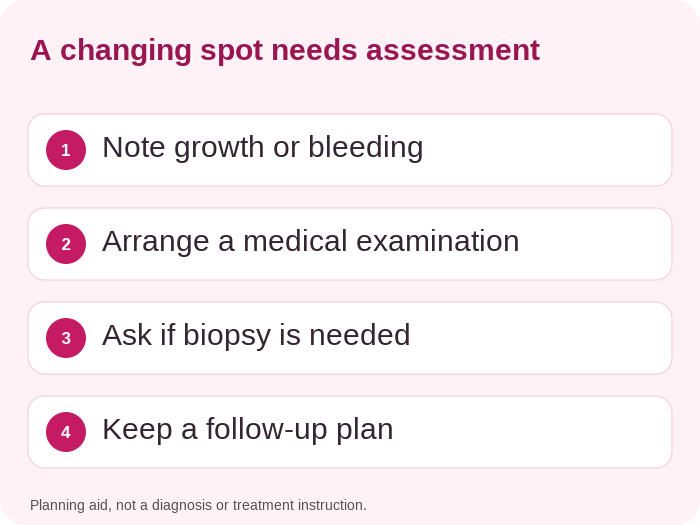
Tell the clinician which spot is new, growing, bleeding, changing, tender or otherwise different from your usual skin. The AAD advises arranging a skin examination for a spot that grows, bleeds or changes. A clinician may recommend further assessment or a biopsy instead of cosmetic treatment. Do not ask a clinic to fade a suspicious spot before its diagnosis is clear, because cosmetic treatment can obscure a lesion that needs medical care.
Prepare a history that helps the examination
Note when you first noticed the spot and what has changed. Bring earlier photographs if available, but explain when and how they were taken. Lighting, filters, makeup and camera distance can make a harmless-looking image misleading. Make a list of previous treatments applied to the area, including any laser, peeling solution or prescription cream, and whether a mark remained after healing.
Tell the doctor about personal or family history of skin cancer, sun exposure and any prior pathology report if relevant. If you have many lesions, identify the one causing concern rather than expecting every spot to be assessed in a short cosmetic appointment. Ask whether a full skin examination is appropriate and what happens if the clinic does not provide the diagnostic service you need.
Understand what an examination can and cannot promise
A clinician may inspect a lesion and use dermoscopy, a magnifying examination technique, when appropriate. If uncertainty remains, they may recommend further assessment or a tissue sample. Ask what finding supports the working diagnosis, whether a biopsy is recommended and how you will receive the result. A reassuring examination is valuable even if no cosmetic procedure is performed that day.
If a biopsy or referral is suggested, ask about timing, wound care, how results will be communicated and what to do if you leave Korea before the result is available. Obtain a copy of the report and the clinician's contact information. Do not substitute an image generated by an app or an online response for the recommended follow-up.
Only then compare treatment options
Once a clinician has confirmed that a lesion is appropriate for cosmetic treatment, ask what options are reasonable for your particular spot and skin. Depending on the diagnosis, an approach may involve sun protection, prescription or other topical products, or a procedure. Choices differ in depth, discomfort, expected recovery and risk. Not every technology offered by a clinic is appropriate for every lesion.
Ask whether the goal is to lighten a confirmed benign spot or treat a different diagnosis such as melasma. Multiple types of pigmentation can coexist, so an approach for one spot should not be assumed to treat all facial color changes. Request an explanation of why the clinician recommends one option over observation or a gentler plan. An immediate procedure is not obligatory after an assessment.
Discuss pigment change and your own healing history
Tell the clinician about previous darkening or lightening after a burn, scratch, acne or procedure. Some people experience post-inflammatory pigment changes after treatment, and the risk depends on the person, treatment and aftercare. Ask about the possibility of persistent color change, irritation, scarring, infection and recurrence, as relevant to the proposed procedure. Do not rely on a guarantee that one device has no downtime or no pigment risk.
Clarify what you should expect to see while healing and when a reaction would need review. Ask what products to pause, what sun protection is recommended and whom to contact if symptoms worsen. The instructions must match the actual procedure, not a generic shopping list.
Plan follow-up around your trip
If an examination occurs shortly before departure, ask whether test results or a post-procedure review will be available while you are still in Korea. If not, arrange an appropriate handover before treatment. A travel itinerary should allow for the possibility that the clinician recommends postponing a cosmetic procedure or needs more information. Consider whether a diagnosis-only appointment is the best use of a short visit.
Keep a copy of the assessment, treatment details and any pathology report in a form your home clinician can understand. Ask how to obtain results securely and whom to contact if a spot changes later. For a concerning or rapidly changing lesion, seek timely local medical evaluation rather than waiting for a future cosmetic appointment overseas.
Protect your skin while arranging assessment
Sun protection is useful even when you have not decided on a cosmetic treatment. Ask your clinician what protection suits your skin and activities; shade, clothing and a broad-spectrum sunscreen are complementary measures rather than competing choices. For a trip, consider how you will protect exposed areas during outdoor transport or sightseeing, and whether a proposed procedure fits that itinerary.
Do not use a strong peel or a fading product on a lesion that is new, bleeding, growing or changing in order to make it less visible before assessment. An examination should come first. Bring your usual product containers so the clinician can see what you have already tried. If you cannot get a timely appointment overseas, seek an appropriate assessment at home rather than waiting for travel. A plan for ongoing review is particularly important when the clinician recommends observing a spot or arranging further tests.
Choosing a relevant listed consultation
Delight Dermatology Clinic is listed on this platform and its international Pigmentation service lists assessment and care for lentigines, age spots and other pigmentation concerns. It may be a starting point for discussing a pigmentation assessment, but its service page does not establish that it offers every diagnostic or biopsy service. Before booking, ask whether the specific changing lesion can be medically assessed and, if appropriate, referred for biopsy or dermatology care.
Read the clinic profile and its international service page, then ask for the clinician's qualifications and the diagnostic pathway. This suggestion reflects a published service, not a ranking or promise of treatment. If a clinic cannot evaluate a changing lesion, seek a qualified medical assessment elsewhere rather than pursuing cosmetic fading.
A compact question list
What is the working diagnosis and what else could this spot be? Does it require a biopsy or referral before any cosmetic treatment? What information must I receive if I leave Korea before a result? If it is benign, what are the alternatives and the likely recovery for each? How will you manage an unexpected pigment change and who will see me if there is a problem?
For a spot that grows, bleeds or changes, make the examination the priority. If you are uncertain about the answer, ask the clinician to write it down. A diagnosis and follow-up plan are useful outcomes even when you choose not to treat the appearance.
Diagnosis comes before removal
Not every brown spot is the same condition. A dermatologist can decide whether a lesion is suitable for cosmetic treatment or needs further examination. New, changing or unusual spots should be raised during the consultation rather than simply included in a pigment package. Tell the doctor if a spot has changed shape, color or size, bleeds, or behaves differently from the others.
Bring the history of one spot
For the lesion that concerns you most, record approximately when you first noticed it and what has changed. Older photographs may help show the difference. Mention any previous attempt to remove or lighten it and whether it returned. Ask the doctor to explain the assessment in plain language. If a biopsy or other medical evaluation is recommended, clarify that pathway before discussing appearance-focused treatment.
Separate cosmetic priorities
Once the diagnosis is established, explain whether your concern is a few individual spots or a broader uneven appearance. Ask which areas the proposed treatment will cover and which will be left alone. A quote should make that distinction clear. If several different types of lesions are present, request a written list or marked photograph so you understand why different approaches may be proposed.
Plan observation after treatment
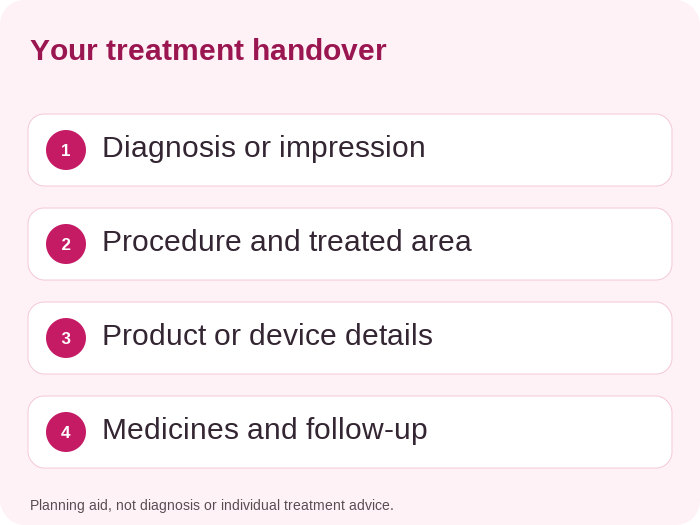
Ask what the treated area is expected to look like during healing and when it should be reviewed. Clarify how to report a spot that persists, returns or changes. Keep the original photographs and treatment record rather than relying on memory. If a different clinician examines the area later, that record can explain what was present before treatment and which method was used.
Maintain perspective on prevention
Discuss ongoing sun protection as part of the plan for sun-related changes. A successful cosmetic result does not mean the rest of the skin no longer needs observation. Ask which changes deserve a medical appointment and whether you need a broader skin examination based on your history. The most useful visit combines a clear cosmetic goal with a sensible plan for future skin health.
Do not let a cosmetic itinerary delay an assessment
If a spot is new or changing, arrange a clinical assessment instead of waiting for a cosmetic appointment in Korea solely because it is cheaper or convenient. Bring any U.S. pathology or dermatology records to a subsequent consultation. If the Korean clinician recommends testing, ask when results will be available, who will explain them and how the report will reach the clinician at home. Keep diagnostic decisions separate from any prepaid removal package. A travel departure date should not determine whether the lesion is examined or which diagnostic pathway is appropriate.
When a spot on the laser quote has changed since your last photograph
A quote that calls a brown spot a sun spot is a starting point for a conversation. If one spot has grown, developed a new color, started bleeding or begun to look unlike the others, ask for a diagnostic skin assessment before arranging treatment to fade it. Record when you first noticed the difference. Bring an older photograph even if it was taken for another reason. Keep the original date and explain whether makeup or a filter changes what the clinician can see.
At the appointment, point to the exact spot instead of saying that your face has generally become darker. Ask which features can be assessed by examination, whether dermoscopy would help and whether a sample or follow-up examination is indicated. A small diameter or an absence of pain cannot settle the diagnosis. Do not let a short return-flight schedule turn an uncertain diagnosis into a same-day cosmetic decision.
If a sample is taken in Korea, agree on how you will receive the report, who will explain it and what happens if you are already back in the United States when it arrives. Record the body site, date and clinic contact. If the spot changes before an arranged appointment, contact a clinician at home promptly instead of waiting for the overseas visit.
Clinical reference · Listed clinic · International consultation
Patient questions
Can I include every brown spot in a laser package?
Only after assessment. Different lesions may require different decisions, and some may need diagnostic evaluation rather than cosmetic treatment.
What if a treated spot returns?
Arrange reassessment and provide the original photograph, date and treatment method. Do not assume every recurrent spot has the same explanation.