Which skincare products should I pause before a procedure?
There is no single pause schedule for every procedure or product. Bring ingredient labels for retinoids, acids, acne medicines and products that irritate your skin, then request a written continue, pause and restart plan. Do not independently stop prescribed medication. Keep recovery care simple and clarify what to do if a product causes burning or a new rash.
Bring the actual products
A list that says cleanser, serum and cream may hide ingredients relevant to treatment. Photograph the labels of prescription products, exfoliating acids, retinoids, acne products and anything that recently caused irritation. Include occasional masks and at-home devices. Ask the clinician to review what you use in practice rather than what you intended to use when you bought the products.
Request a pause-and-restart list
For each relevant product, ask whether it should continue, pause or change and when it can be restarted. The answer depends on the procedure and your skin, so avoid copying another patient’s schedule. Get the instructions in writing. Do not stop prescribed treatment or other medication solely because a social post recommends it; ask the prescribing or treating clinician how to coordinate the plan.
Keep recovery products identifiable
Ask for the name and purpose of each product supplied after treatment. Is it a cleanser, moisturizer, dressing, sunscreen or medicine? Confirm how much to use, how often and for how long. If you have a history of reactions, ask about ingredients and alternatives before the procedure. Keep packaging available if you later need to explain what was applied to another clinician.
Avoid adding several variables
A trip to Korea can make it tempting to try many new skincare products. During the period when you are assessing a procedure, ask whether you should keep the routine stable. If discomfort develops after multiple changes, it may be difficult to identify the cause. A manageable routine also reduces the chance that detailed instructions are lost among optional steps and promotional additions.
Define the response to irritation
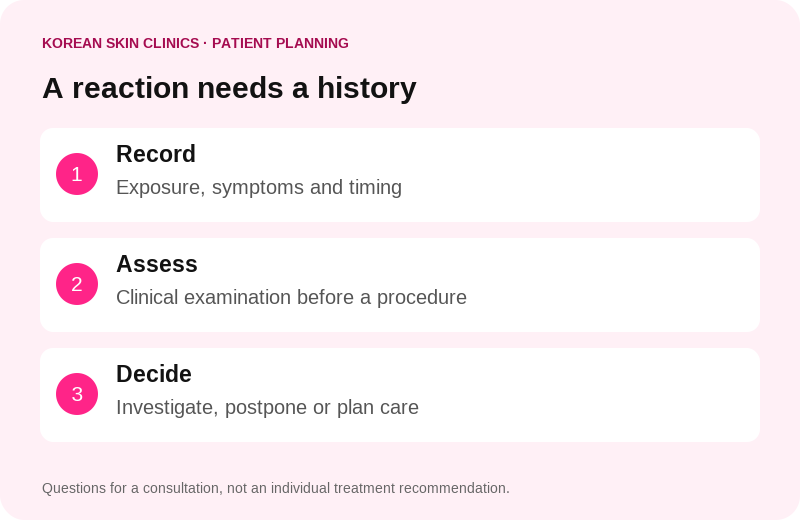
Ask what mild sensations are expected for your specific treatment and what should prompt a message or examination. Do not assume persistent burning or a new rash is a normal sign of activity. Record when the symptom began and which products were used. Keep follow-up focused on the sequence of events so the clinician can decide whether the routine or the recovery plan needs to change.
Distinguish a prescription from an optional purchase
Ask which items are required for the treatment plan, which are alternatives and which are optional cosmetic products. If the clinic sells a large aftercare set, request the purpose of each item and whether you can use a product you already tolerate. Keep medical instructions separate from promotional recommendations. This helps you follow the essential steps correctly and avoids adding unnecessary complexity. If cost or product availability is a problem, explain it before the procedure so the clinician can propose a workable plan.
Create a short written schedule
A useful schedule names the morning and evening products, the treated area and any planned change after review. Ask the clinician to clarify whether instructions apply to the whole face or only the procedure site. Include a contact instruction for irritation and the date or condition for restarting paused products. Keep this schedule with your medications rather than relying on memory. When you return home, compare it with your previous routine before resuming everything at once, particularly if you are also seeing another clinician who may recommend changes.
Questions to take to your consultation
Which exact products should pause, continue or restart? What is the purpose of each aftercare product? Which symptoms mean the routine needs clinical review?
Write restart instructions beside each active ingredient
Bring the generic ingredient names and strengths of U.S. prescriptions and over-the-counter products to your appointment in Korea. Ask for individualized instructions on when to continue, pause or restart each item, especially if more than one procedure is planned. Do not stop prescribed medication based only on a general clinic message. If a Korean product is substituted, ask what it contains and how it fits with the routine you will use at home. A simple written schedule is more useful than a bag of unfamiliar products with instructions you cannot read.
Patient questions
Should I buy every product in an aftercare set?
Ask which items are required, optional or replaceable with a product you already tolerate. Understand each item’s purpose before purchasing.
Can I restart all actives when my skin looks normal?
Appearance alone may not determine readiness. Use the procedure-specific restart instructions or ask the treating clinician to review the area.