Should a brown spot be checked before laser removal?
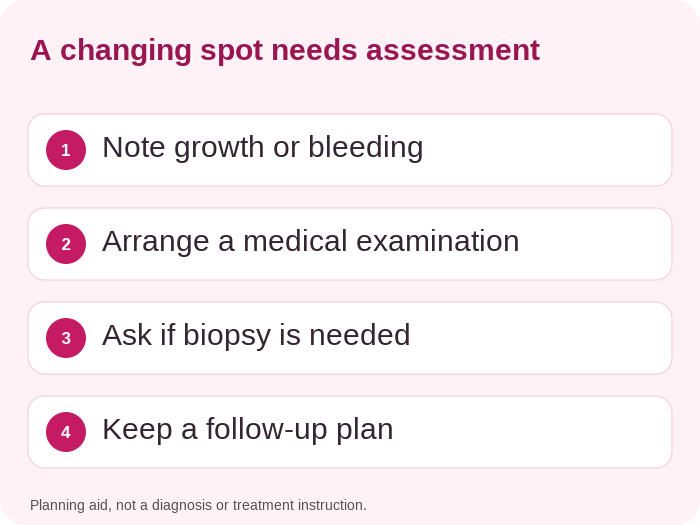
Yes. A clinician should establish that a brown spot is benign before cosmetic treatment, because sun spots can resemble other lesions and removal may destroy diagnostic clues. Stable benign spots may be treated selectively, but changing, bleeding or irregular lesions need medical assessment first. Treatment can leave pigment changes and does not prevent future spots from sun exposure.
What the treatment does
Solar lentigines are well-defined areas of pigmentation associated with cumulative sun exposure. Treatment can include selected lasers, light devices or other clinician-directed methods. The first step is deciding that the spot is benign: cosmetic removal can destroy clues needed to diagnose a concerning lesion.
Who it may suit
Patients troubled by stable brown spots may be suitable after examination. A spot that changes, bleeds, has irregular colors or differs markedly from others needs assessment rather than immediate cosmetic treatment. Freckles, melasma, seborrheic keratoses and post-inflammatory marks can look superficially similar but call for different plans.
Treatment and recovery
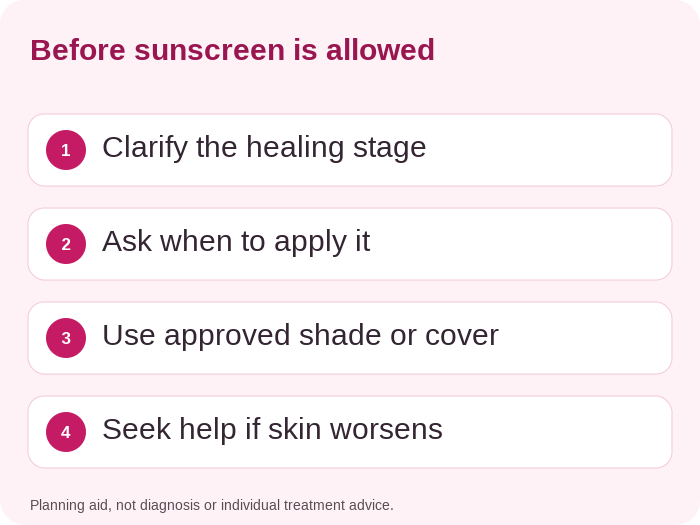
The clinician should identify which individual lesions are being treated and explain whether a test spot is helpful. Treated areas may darken or crust before improving. Plan gentle aftercare and protection while healing. New spots can appear with further sun exposure, so treatment is not immunity against future pigmentation.
Risks and warning signs
Uneven clearing, darkening, pale marks, burns and scars are possible. Picking at a treated spot increases the chance of a poor cosmetic result. Report unexpected growth or recurrence with an altered appearance rather than assuming the lesion simply needs another pass.
Results, alternatives and the next decision
Spot treatment and prevention have different roles. Removing existing benign spots does not remove the history of sun exposure or prevent every new lesion. Ask how to monitor the skin after treatment and which changes should prompt medical review. The result should be judged by the treated lesion itself: whether it is lighter, whether its border remains and whether the surrounding skin has changed color. A broad brightening filter or makeup can conceal an uneven result in photographs. If a spot only partly responds, ask whether the diagnosis should be reconsidered before repeating the procedure. Alternatives may include another clinician-directed method or leaving a harmless spot untreated. The appropriate choice depends on the diagnosis, skin tone, location and the cosmetic significance of a possible pale or dark mark. For a single prominent lesion, a careful targeted plan may be more valuable than a discounted package treating the entire face.
Plan the visit around diagnosis
Bring photographs from before the pigment appeared, a list of previous laser names if available, and the products that have caused irritation. Ask the clinic to write down the diagnosis and distinguish the primary treatment from optional add-ons. For a visitor, it is useful to ask whether a test area and later review would be more sensible than treating the whole face immediately. Consider the timing of outdoor sightseeing, long flights and a return-to-work event. A package that uses every available day in Seoul may leave no opportunity to assess a delayed reaction. Reserve time for review instead of assuming that a last-day appointment is convenient. Keep copies of treatment settings or the procedure record where the clinic can provide them; these can help another clinician understand a later reaction.
Questions for your consultation
Ask what makes the diagnosis secure, whether any lesion should be biopsied first, and whether spot treatment is more appropriate than a full-face session that exposes unaffected skin.
Comparing a quote in Korea
For sun spot treatment, compare number and size of diagnosed lesions, test treatment and any separate diagnostic investigation. Ask for these items in writing so a lower headline price does not conceal a different scope of care. Confirm which follow-up visits are included and what happens if the clinician changes the plan after examining you. Discuss costs after agreeing on the diagnosis and realistic goal; a package should not determine how much treatment you receive.
Separate cosmetic spot removal from diagnosis
Before booking spot removal during a Korea trip, identify whether the lesion has already been assessed by your U.S. dermatologist and bring that record. A photograph or package description cannot replace evaluation of a new or changing spot. Ask how the clinician will document the diagnosis and whether any testing or result discussion must be completed before you leave Korea. If several spots are treated, request a location map or clear photographs. This makes follow-up at home more useful than a receipt saying only laser facial.
Patient questions
Can I have a changing spot removed as a cosmetic add-on?
Have it assessed first. The clinician may recommend investigation or biopsy rather than immediate cosmetic destruction, depending on its appearance and history.
Will treated sun spots come back?
Some lesions may need reassessment or further treatment, and new spots can develop. A recurrent lesion with a changed appearance should be medically reviewed rather than automatically lasered again.