How should I plan a melasma consultation in Korea?
Start with a dermatologist’s diagnosis, especially when patches recur or several types of pigmentation overlap. A useful melasma consultation establishes the pattern, previous reactions, sun-protection routine and maintenance needs before choosing a procedure. Plan how prescriptions and follow-up will continue after leaving Korea; a short visit cannot establish a permanent cure.
Begin with the pattern, not a laser menu
Melasma often appears as patches of increased pigmentation on the face. It can persist and recur, so a short visit is better approached as the beginning of a management plan than a deadline for complete clearance. Ask the examining doctor whether the pattern fits melasma, another pigment condition, or several conditions together. Photographs taken during a clearer period can help explain how the discoloration changes over time.
Where procedures fit
The American Academy of Dermatology describes sun protection and medication as important parts of melasma care; selected laser or light treatments can be considered alongside them. A procedure is not a substitute for managing triggers and maintaining results. Ask what problem the proposed device is intended to solve, why it suits your skin tone, and what would make the doctor stop or change the course.
Bring a useful history
Prepare a timeline of when the patches appeared, pregnancy or hormonal changes if relevant, products used, previous prescriptions, and procedures that helped or worsened the pattern. Include photographs of the actual containers when ingredient names are unfamiliar. Tell the doctor if you have experienced prolonged discoloration after an injury. This allows the conversation to move beyond the broad promise of brightening toward a specific, testable plan.
Plan the months after Seoul
A visit may be long enough for assessment and an initial treatment, but maintenance continues after departure. Ask which parts of the plan can be supervised at home and how to obtain follow-up if pigmentation becomes darker. Request a written schedule for reassessment rather than automatically buying repeated sessions. Choose an approach you can realistically continue with your work, outdoor exposure and access to prescriptions.
Define meaningful improvement
Choose a consistent way to judge change: the same lighting, camera distance, facial angle and absence of makeup. Compare the appearance over an agreed interval rather than after each daily mirror check. Ask whether the aim is lighter patches, less contrast, fewer flares or all three. An honest discussion of recurrence is useful information for deciding how much time and money to commit.
A useful consultation example
Suppose your main concern is patchy cheek color that improved after a previous course and then returned. Instead of asking to repeat the same package, bring the earlier photographs and ask what may explain the recurrence. Was the initial diagnosis unchanged? Was the improvement sustained after the course ended? Which maintenance steps were feasible? This discussion can help distinguish an unsuccessful treatment from a treatment that produced a temporary benefit but lacked a workable longer-term plan.
Compare plans on the same endpoint
When two clinics propose different approaches, ask each to describe the expected change over the same interval. One may be discussing gradual improvement with a daily regimen, while another is describing a short series of procedures. Record the burden, likely limitations and follow-up of each. Ask how the clinician will respond if your skin becomes irritated, because tolerability affects whether you can continue the plan. Avoid comparing an immediate photograph with a result assessed months later.
Make maintenance concrete
Before paying for a course, ask for a written distinction between the active treatment phase and maintenance. Which appointments are necessary, which products are optional, and when should the plan be reassessed? If you cannot obtain a recommended prescription at home, explain that limitation before starting. Ask whether your home dermatologist can receive a brief treatment summary. A plan is more useful when it can survive ordinary travel, work and product availability rather than depending entirely on repeated clinic visits.
Questions to take to your consultation
Which findings support melasma rather than isolated sun spots? What is the first step if my patches darken after treatment? Which maintenance steps must continue after I return home?
Prepare for care on both sides of the trip
If your U.S. dermatologist has diagnosed melasma, bring the diagnosis, prescription ingredients and a history of what happened after earlier procedures. Ask the Korean clinician whether the consultation changes that plan or adds a specific intervention. Write down who will manage maintenance after you return, how response will be assessed and which changes should prompt reassessment. Compare photographs under consistent conditions rather than using a brighter vacation photograph as evidence of lasting improvement. A decision to continue medical care without a laser can still be a useful outcome of the visit.
How to carry a melasma maintenance plan across a US–Korea trip
Start with an ordinary day at home. When do you leave the house? How much time do you spend driving, walking outdoors or working where there is bright daylight? Which sunscreen can you comfortably wear in the amount the label directs? A plan that assumes you can change your workday or use a product you dislike is hard to sustain. Bring your usual sun protection to the consultation or take photographs of its front and ingredient panels. Tell the clinician what makes it easy or difficult to use. Those details can change the conversation more than a photo taken under the brightest lights in a clinic.
If your goal is to understand a change in color, choose a small area you can identify in a photograph. A freckle, an old acne mark and a broader patch of melasma may be close together. Point out which area worries you and whether it was there before pregnancy, a change of medicine or a previous procedure. Ask the clinician to show you how they distinguish those features on your actual skin. If the diagnosis is uncertain, ask whether you should have a local assessment before making international treatment plans. Photographs can help share observations; they cannot settle every diagnosis.

For melasma, the American Academy of Dermatology advises daily light protection, including broad-spectrum water-resistant sunscreen with SPF 30 or higher. A tinted sunscreen containing iron oxide can help protect against visible light, which can deepen melasma. Shade and a wide-brimmed hat are also useful. A high SPF number alone does not tell you whether a product contains iron oxide. If you are shopping in Korea, ask a pharmacist or the clinic to point out the ingredients on the original packaging. If you already have a product you tolerate and use consistently, bring its details before buying several replacements.
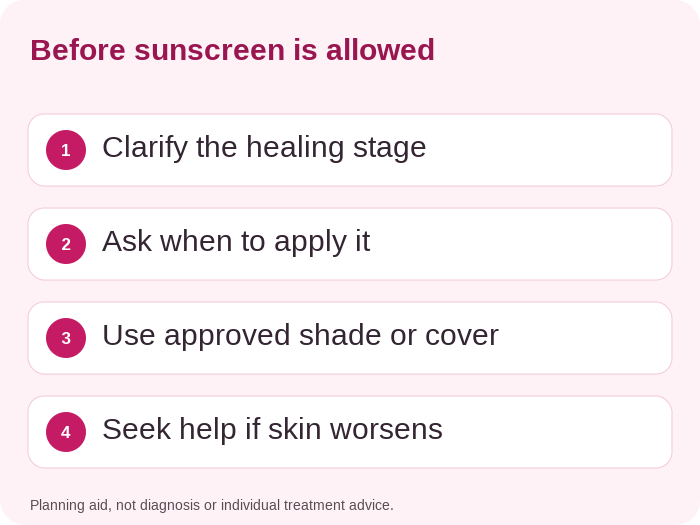
Think about what you could reasonably do on the day of your return flight. You may be moving between a hotel, a train platform and an airport, carrying limited products. Ask which steps are essential, what you need when outdoors and which optional products can wait until your routine is steady. If you have had a procedure, the treating clinician’s wound-care instructions matter: ask when your usual sunscreen, cosmetic coverage and other skin products may go on the treated skin. A general sunscreen guide cannot determine when a fresh wound is ready for a particular product.
A lighting difference can masquerade as a treatment result. If you decide to keep a personal record, try an unfiltered front view in the same place, with the same light and camera angle. Mark whether you are wearing makeup, tinted sunscreen or neither. A photo on the day you leave Seoul and a bathroom selfie weeks later may show different colors even if little has changed in the skin. Rather than checking repeatedly throughout the day, agree on a reasonable interval for comparison and note symptoms or new changes separately. Ask your clinician what would justify an earlier review.
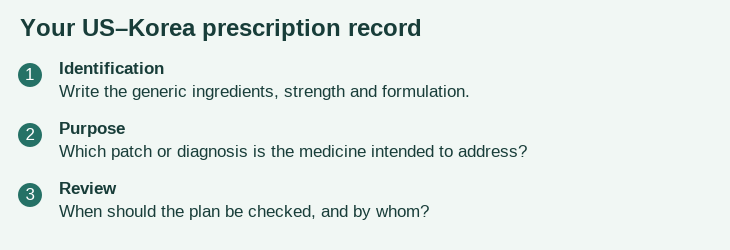
A prescription to take home needs a usable name. Request the generic name and strength of every active ingredient, where the product should be applied, the planned period of use and the next evaluation date. If a cream is compounded, one trade name may not describe everything in the tube. Tell the prescriber about products and medications already used in the US and about pregnancy or plans for pregnancy. If the proposed product is unavailable near home, ask your regular clinician to review the plan before trying to substitute a similarly named cream on your own.
If you return from Korea and a patch becomes darker, first describe what changed. Has an old patch returned in the same area after a period outdoors? Is there burning, flaking or a new outline where a product was applied? Is one spot changing differently from all the others? Each is a different reason to seek advice. Do not assume that darker skin automatically needs a stronger active ingredient or another device session. Arrange prompt review of an unusual or changing individual lesion. For a familiar stable pattern, ask how the original plan should be reassessed.
Ask for an estimate that separates examination, any proposed treatment and follow-up. If a package includes repeated visits, put those dates beside the dates you can actually be in Seoul. Consider the expense and inconvenience of an extra visit if your skin needs review sooner than expected. A local review, or a Korea consultation for a second opinion with treatment continued at home, may be easier to sustain. The decision can be revisited when you know the diagnosis and understand what outcome is realistic for your skin.
Delight Dermatology Clinic is listed on Korean Skin Clinics. Its international pigmentation service describes assessment of melasma and persistent pigmentation. If your question is why a patch returned or whether the current plan still fits, ask for a pigmentation assessment and bring the treatment history. Confirm who can explain the plan, which records can be provided in English and whether a follow-up can be completed before departure. The clinic’s published scope supports discussing these concerns; availability and individual treatment choices need confirmation directly with the clinic.
Before the appointment ends, ask the clinician to finish three sentences in terms you could repeat to your US provider: “We think this is …”; “Over the next period we are looking for …”; and “If this happens, contact …”. A written answer records the diagnosis, the intended change and who can help if the plan needs revision. Improvement does not have to mean complete disappearance of every mark. If the remaining color is acceptable to you, say so. That preference belongs in the maintenance plan just as much as the choice of product or procedure.
Clinical reference · www.aad.org
The patch appeared after a medication change: who should review it?
Suppose the discoloration became visible shortly after you changed a hormonal medicine in the United States. That sequence is useful information, but it cannot establish that the medicine caused the patch. Melasma can be influenced by several factors, including hormonal changes and sun exposure. Write down when you first noticed the patch, what changed in your medication list, and whether your outdoor routine changed around the same time. An earlier photograph from before the change can help even if the lighting is imperfect.
Bring the prescription name and the reason it was prescribed. Ask the dermatologist which features support melasma, whether another cause should be considered, and whether to send the assessment to the clinician who manages the medicine. Do not interrupt prescribed contraception or another treatment on the strength of an aesthetic consultation photo. Before paying for a series, ask how the diagnosis and the follow-up plan would change if the medication needs to continue. You can make progress on suitable sun protection while those clinicians coordinate.
Sources and clinical guidance · aad.org · Clinic profile · Official international consultation
Patient questions
Can melasma return after it improves?
Yes. Melasma can recur, so discuss maintenance and realistic review intervals rather than treating a clearer photograph as evidence that ongoing care is unnecessary.
What should I bring to a melasma consultation?
Bring photographs showing changes over time, prior treatment names, product labels and a history of hormonal changes or pigment reactions. These help distinguish recurrence from a different condition.