How should I organize recovery after skin treatment in Seoul?
Choose accommodation and transport that make the clinic and required aftercare accessible. Obtain supplies, first-evening instructions and urgent contact arrangements before treatment. Keep activities flexible and follow procedure-specific guidance on exercise, sauna, swimming and makeup. If sedation is involved, arrange the assistance the clinician requires rather than assuming you can return alone.
Choose accommodation around care
Consider the route back to the clinic, access to transport and a place where you can follow aftercare comfortably. Ask whether the planned procedure requires assistance, special supplies or a quieter schedule. A central hotel is useful only if it fits the actual recovery needs. If sedation is involved, obtain specific instructions about accompaniment and transport rather than assuming you can travel alone afterward.
Prepare before the appointment
Collect the products and supplies the clinic recommends, save the address and contact details, and understand the first evening’s instructions. Ask how to clean or protect the treated area if applicable. Keep prescription instructions accessible and clarify any uncertainty before leaving. This avoids trying to solve basic questions when you are tired, uncomfortable or outside the clinic’s normal response hours.
Make activity plans flexible
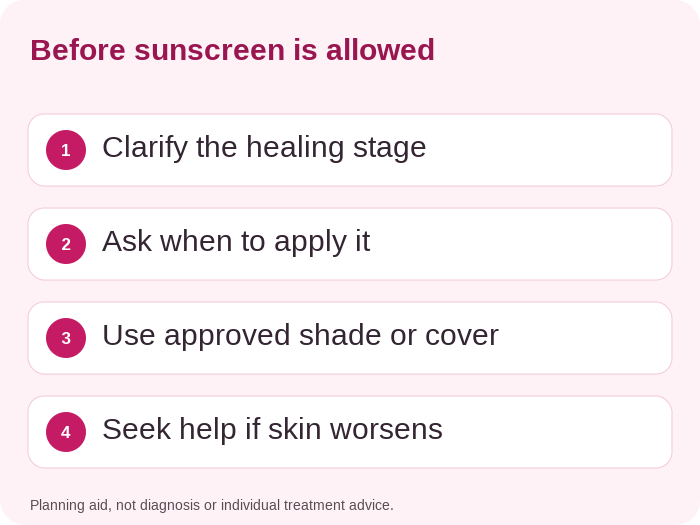
Ask about exercise, swimming, sauna, makeup and other activities for the exact procedure. There is no single rule that applies equally to every treatment marketed as minimally invasive. Tell the clinician about booked activities so the advice can be practical. Leave space to change plans if recovery is different from the estimate, and avoid treating a tourism schedule as more fixed than clinical follow-up.
Know how to seek assessment
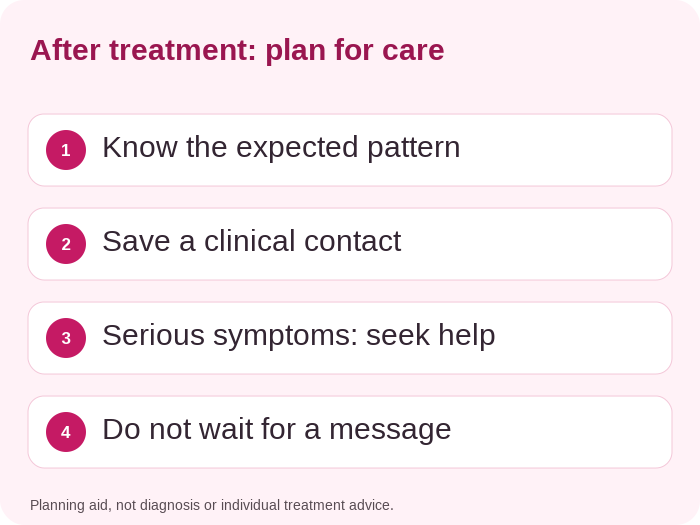
Save the routine follow-up channel and the instructions for urgent concerns separately. Ask where you should go if the clinic is closed and you need an in-person evaluation. If a symptom seems serious, do not wait for a social-media reply. Bring your treatment record to any assessment so the next clinician can identify the procedure, product and timing.
Prepare the transition home
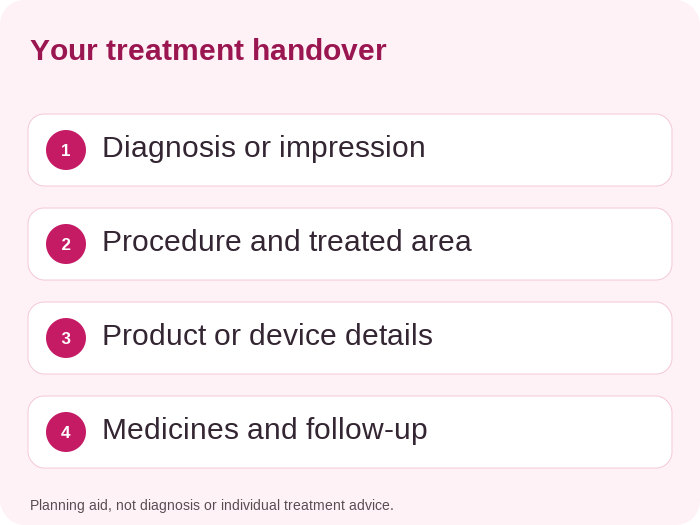
Before departure, ask for a review if recommended and obtain the final aftercare plan. Keep the treatment record, prescriptions and photographs in an accessible location. Confirm whether any monitoring or future appointment is needed at home. Recovery planning is complete only when you know how care continues after the trip, not simply when your hotel stay ends.
Consider the first journey after treatment
Ask how you should return to your accommodation and whether someone needs to accompany you. Procedures involving sedation or more intensive care require specific instructions; do not assume that a taxi alone satisfies them. Save the address in a form a driver can use and avoid scheduling a complicated transfer immediately afterward. If the clinic anticipates dressings, swelling or discomfort, plan a route that does not require unnecessary walking or carrying luggage. Practical transport planning can make the first recovery period much easier to manage.
Keep your care information accessible
Store the clinic’s contact details, treatment record and aftercare instructions somewhere you can reach without searching through multiple apps. If you are traveling with someone, let them know where the information is and what help you may need. Ask the clinic which symptoms would require an urgent visit rather than routine messaging. If you need assessment elsewhere, take the records with you. A clear information pack is especially useful when language, unfamiliar surroundings and concern about symptoms occur at the same time.
Questions to take to your consultation
What assistance or supplies will I need on the first evening? Which booked activities should be changed for this procedure? Where should I seek assessment when the clinic is closed?
Make a practical recovery plan before leaving the U.S.
Choose lodging and transportation around the clinic's review plan rather than treating recovery as spare sightseeing time. Ask whether you will need assistance, supplies or an in-person visit after the procedure. Keep the clinic's address and contact instructions available offline. Discuss what would happen if recovery changes your return date and how additional care would be paid for. Before leaving Korea, check that you have the procedure record, written instructions and any scheduled follow-up. Arrange help at home if needed instead of assuming that being able to board a flight means you can immediately resume normal activities.
Patient questions
Can I use a sauna or swim during recovery?
Ask for instructions for the exact procedure and healing stage. A generic minimally invasive label does not establish when these activities are appropriate.
What should be ready before I leave the clinic?
Have written aftercare, necessary supplies, the treatment record, follow-up arrangements and clear instructions for urgent concerns.